3 hr
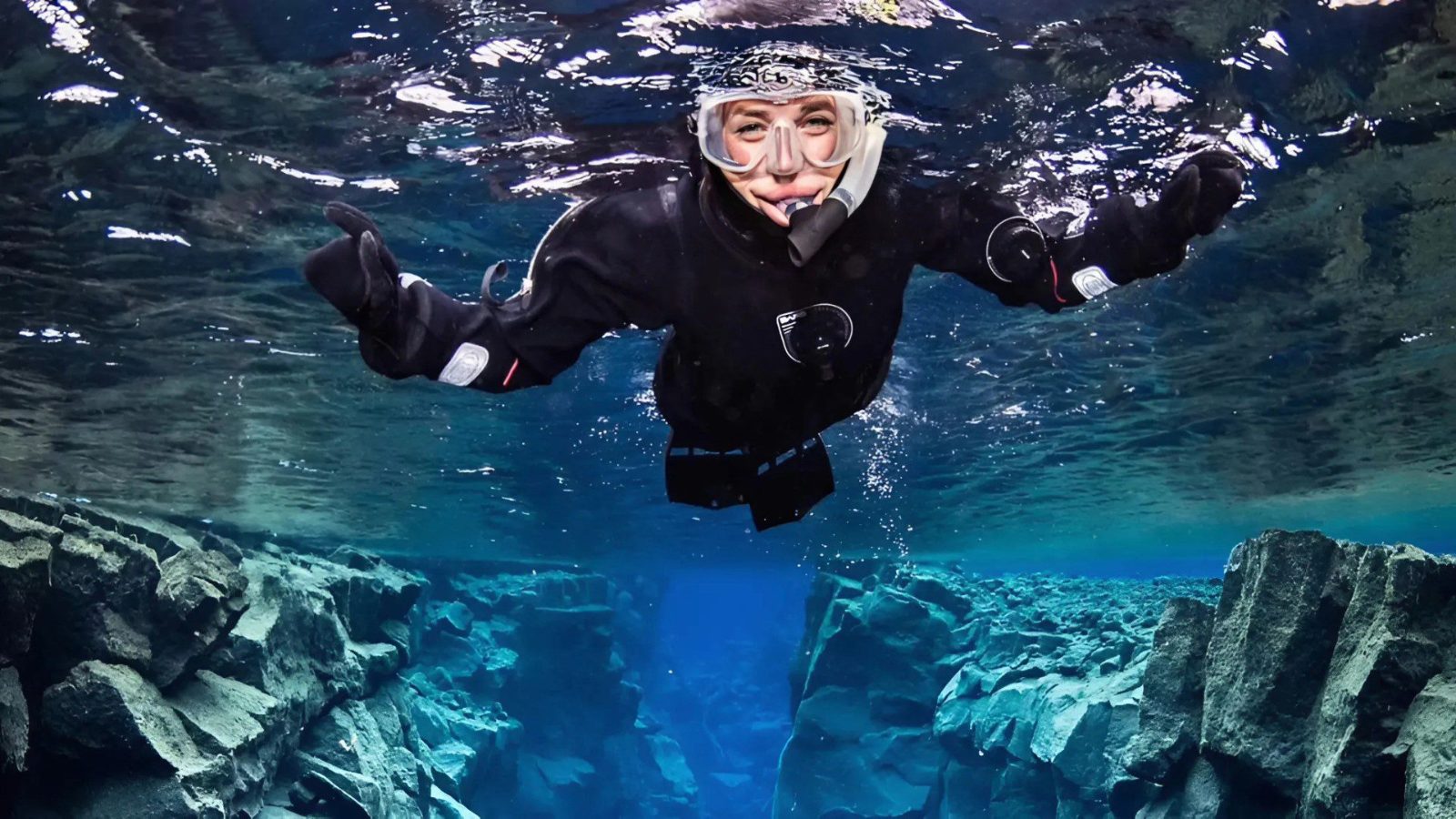
Silfra Fissure Snorkeling Tour with Underwater Photos
- Entry ticket
- Mobile voucher
- Valid same day
- Free cancellation
Snorkeling in Silfra Fissure — Guided Drysuit Entry at Þingvellir
Two continents drift apart in silence, and glacial meltwater remembers everything.
Compare fares, pick the fit — all bookings are mobile-voucher and eligible for free cancellation where shown.
3 hr
5 hr 30 min
3 hr
| Experience | Duration | Rating | Pickup | Small group | Free cancel. | Price | |
|---|---|---|---|---|---|---|---|
|
Standard Entry
Most popular
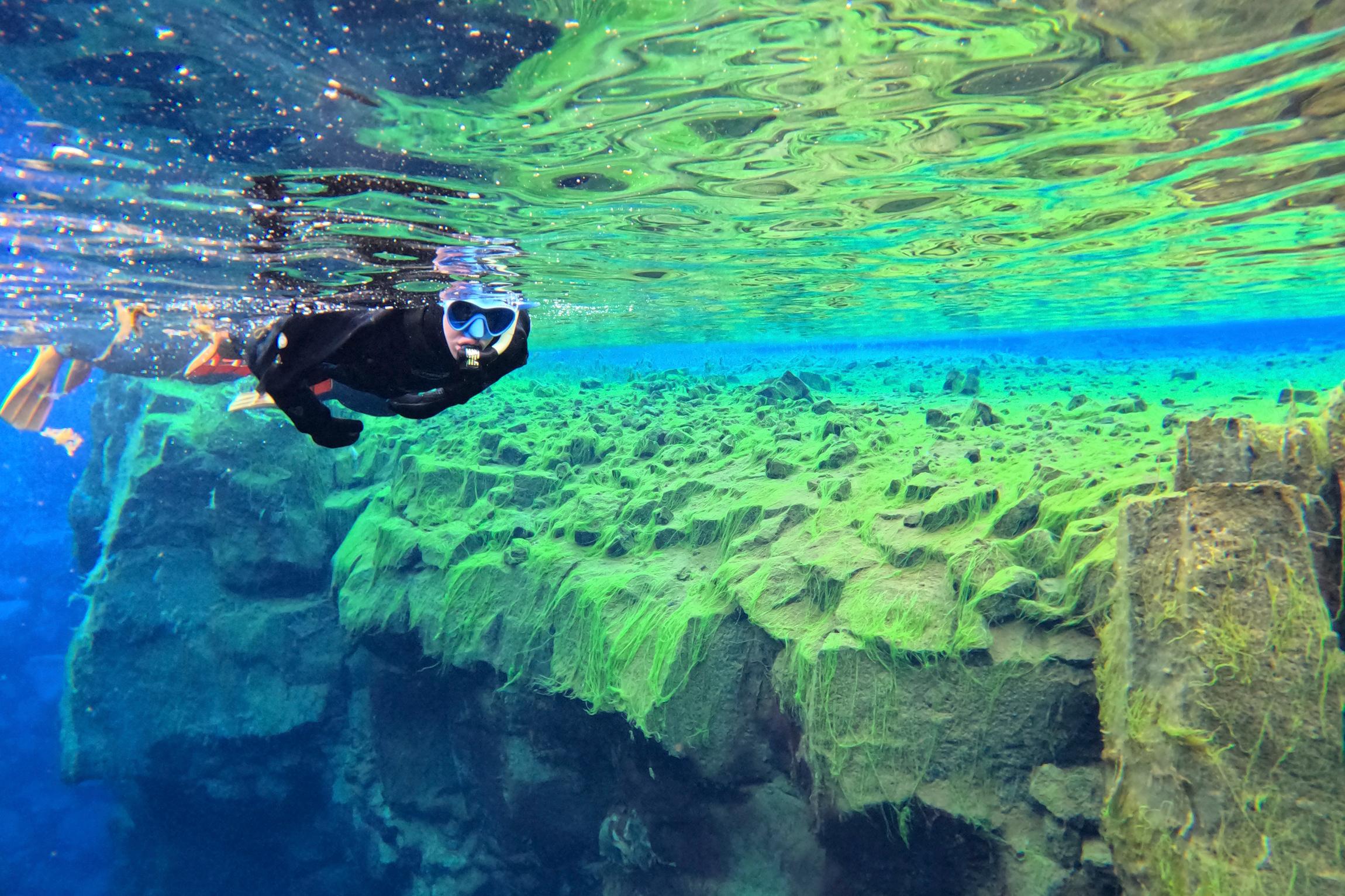
Silfra Fissure Snorkeling Tour with Underwater Photos
|
3 hr | ★ 4.9 | — | — | ✓ | €126 | Book → |
|
Standard Entry
Silfra Fissure Snorkeling Between Two Continents
|
5 hr 30 min | ★ 4.7 | ✓ | ✓ | ✓ | $137 | Book → |
|
Standard Entry
Silfra Fissure Snorkeling Tour Between Two Continents
|
3 hr | ★ 4.8 | — | ✓ | ✓ | $137 | Book → |
Worth it for novelty seekers, not scenery hunters
Snorkeling in silfra fissure is a novelty purchase, not a scenery purchase. Þingvellir National Park charges 0 ISK entry, but a guest fee applies and every operator running snorkeling in silfra fissure tours adds its own charge on top, so the drysuit, guide, and glacial-meltwater swim between the North American and Eurasian plates is what you are actually paying for. What you get is roughly 100 metres of visibility in 2°C water, tectonic rift walls, and Silfra Cathedral opening into Silfra Lagoon. First-time Iceland visitors and confident swimmers get the strongest return. If you are cold-sensitive, note the drysuit keeps your body dry while your face and hands stay exposed, and the burn fades after five minutes. Travelers chasing landscape drama over rare experience will find the Þingvellir rift walk delivers more for free.
Bottom line: Book snorkeling in silfra fissure tickets if the tectonic-plate swim is the point; skip it if you came for landscapes.
They complement each other, but most visitors who do both find Silfra Fissure diving the more advanced, logistics-heavy choice, while snorkeling in silfra fissure is easier to access and keeps you closer to the surface. If you want the clearest fit for comfort, certification, and depth, snorkeling wins for most first-timers.
|
Top pick Snorkeling |
Diving | |
|---|---|---|
| Water position | Surface swim | Fully submerged |
| Required certification | No dive cert stated | Autonomous diver + dry suit |
| How much gear you wear | Full cold-water kit | Full cold-water kit |
| Depth | Surface only | Up to 18 m |
| Physical intensity | Lower exertion | Higher exertion |
| Who it suits | Non-divers, cold-water beginners | Certified dry-suit divers |
| Guide requirement | Buddy required | Buddy required |
| See tickets & prices |
Verdict: For most travelers, snorkeling in Silfra Fissure is the simpler choice, while diving suits certified dry-suit divers who want the deeper experience.
Hand-picked experiences loved by thousands of travelers
2.5 - 6 hours
Free Cancellation
Snorkel between two continents in glacier-fed water with up to 100 meters of visibility.
4.5 hours
Free Cancellation
Snorkel between two continents in Silfra's crystal-clear glacial water, with photos included.
2.5 hours
Free Cancellation
Snorkel the crystal-clear Silfra fissure in a small private group, kept warm with dry gloves and hot cocoa.
10 hours
Free Cancellation
Explore the Golden Circle's geothermal wonders and snorkel between two continents in Silfra.
5 - 10 hours
Free Cancellation
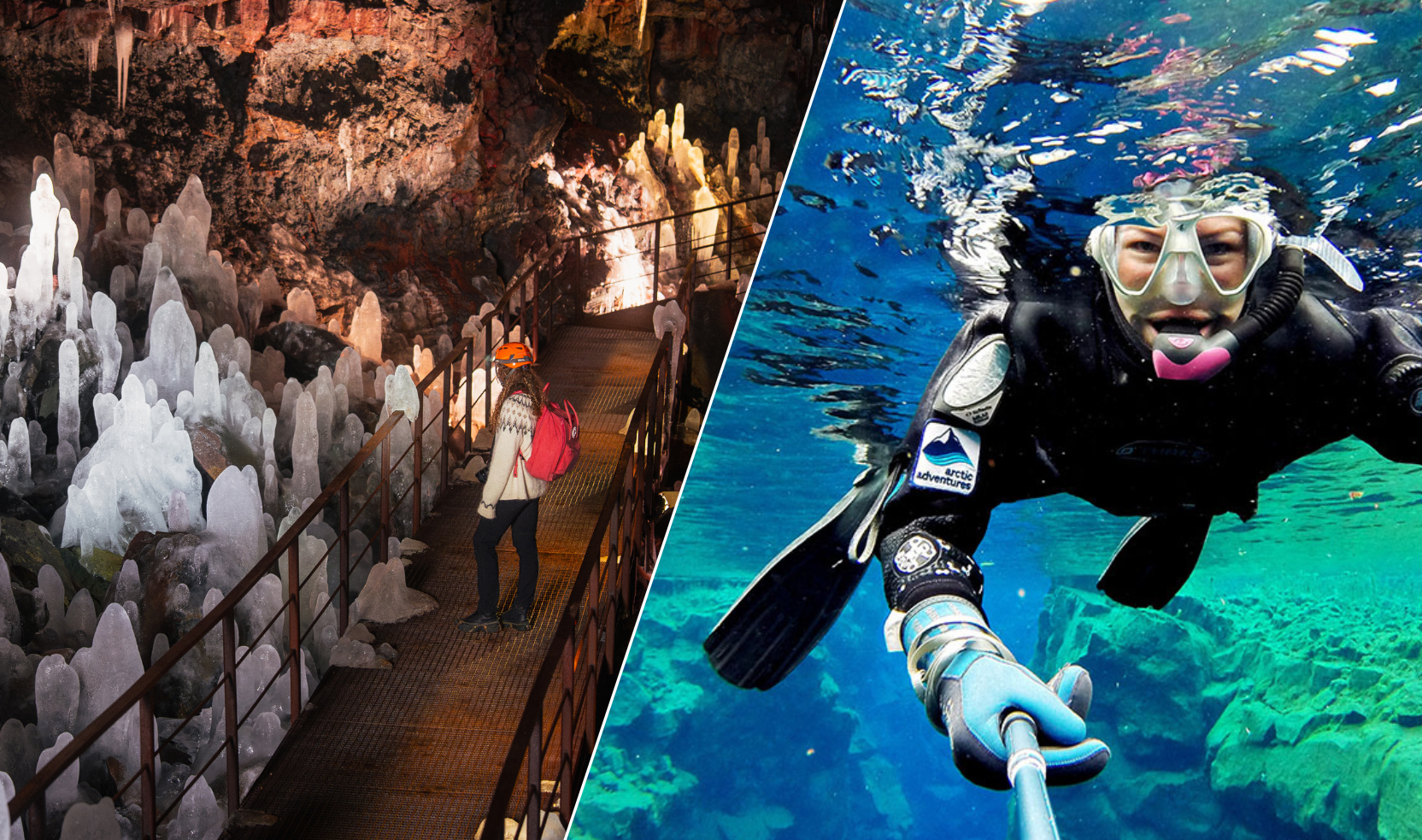
Explore a volcanic lava tunnel, then snorkel the crystal-clear Silfra fissure between two continents.
3 hours
Free Cancellation
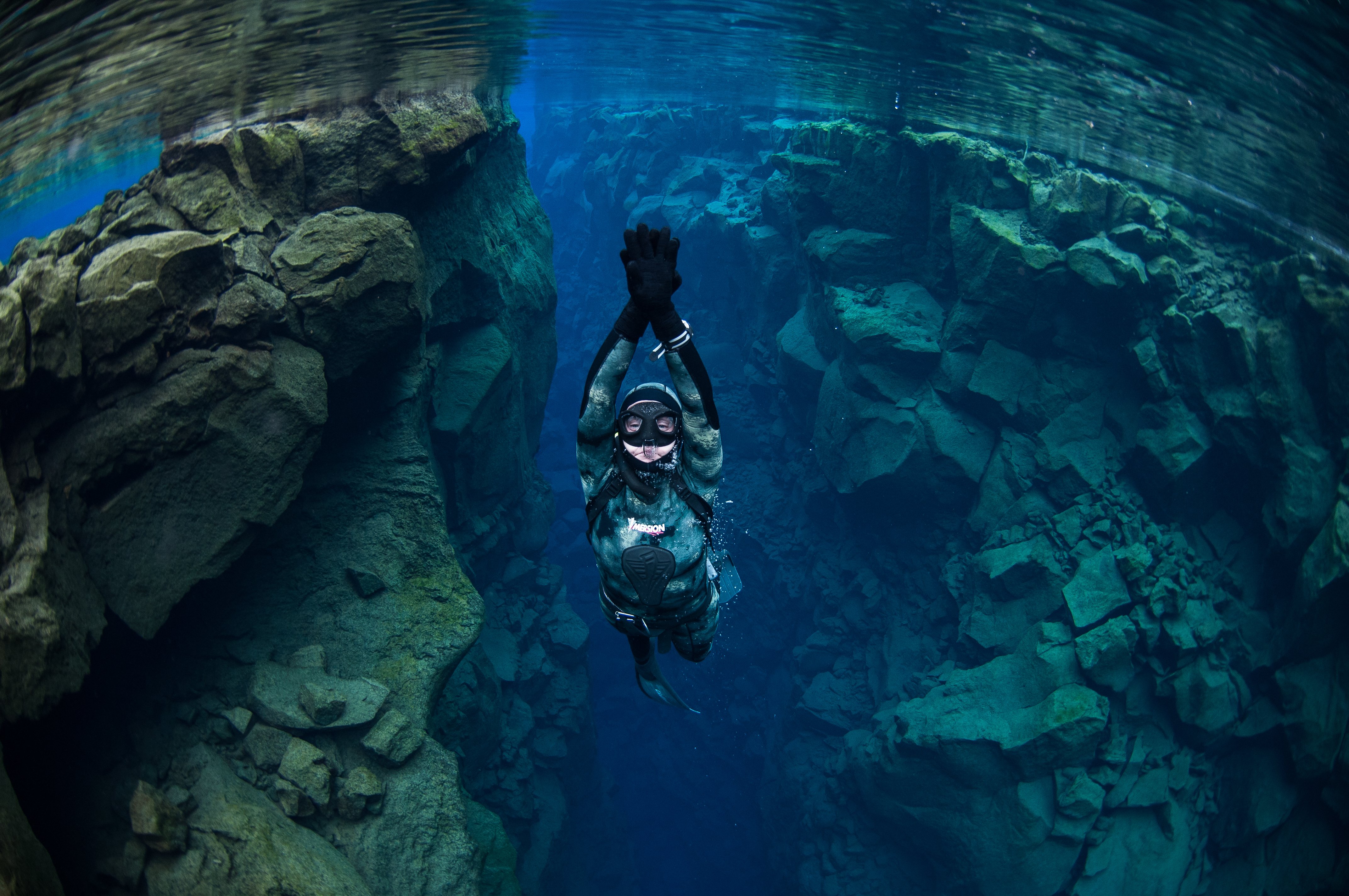
Freedive between two continents in Iceland's crystal-clear Silfra fissure with an expert guide.
11 hours
Free Cancellation
Snorkel between tectonic plates in Silfra, then explore Iceland's Golden Circle in total privacy.
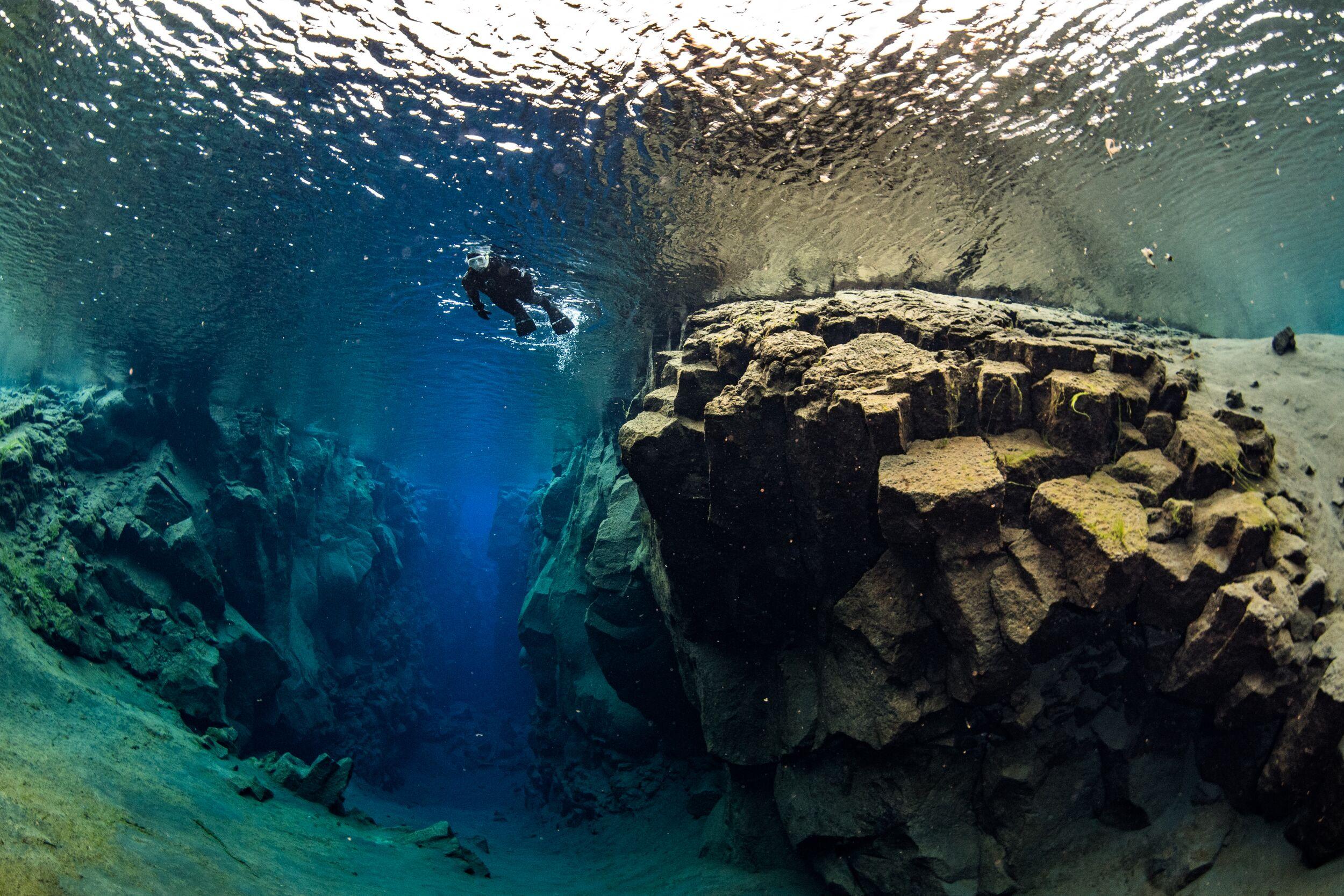
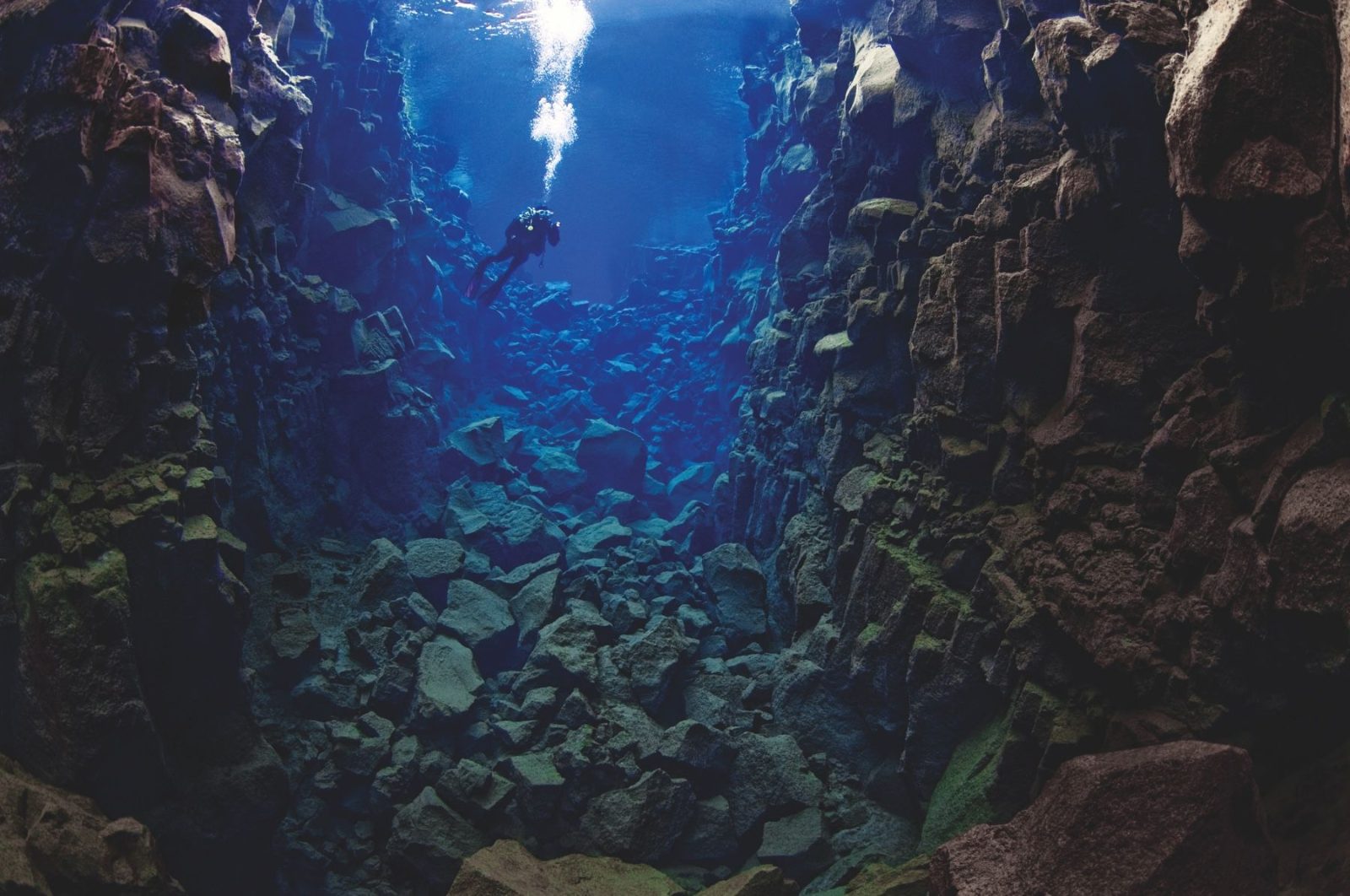
Silfra Hall is the first major underwater section people often reference when describing the fissure. Its clear water can deliver visibility of more than 100 meters, and it sits inside a rift system shaped by the tectonic plates that separate here.
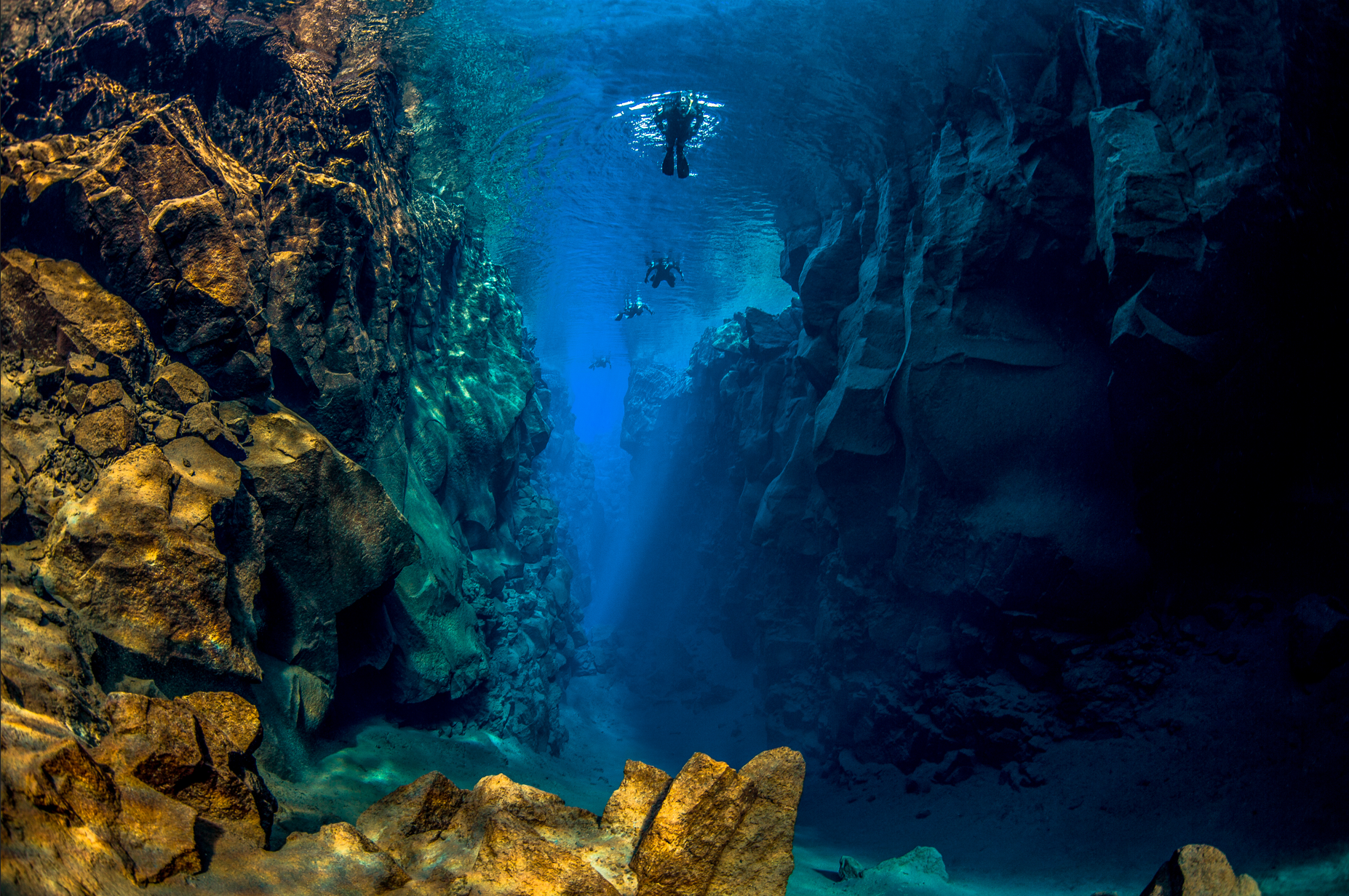
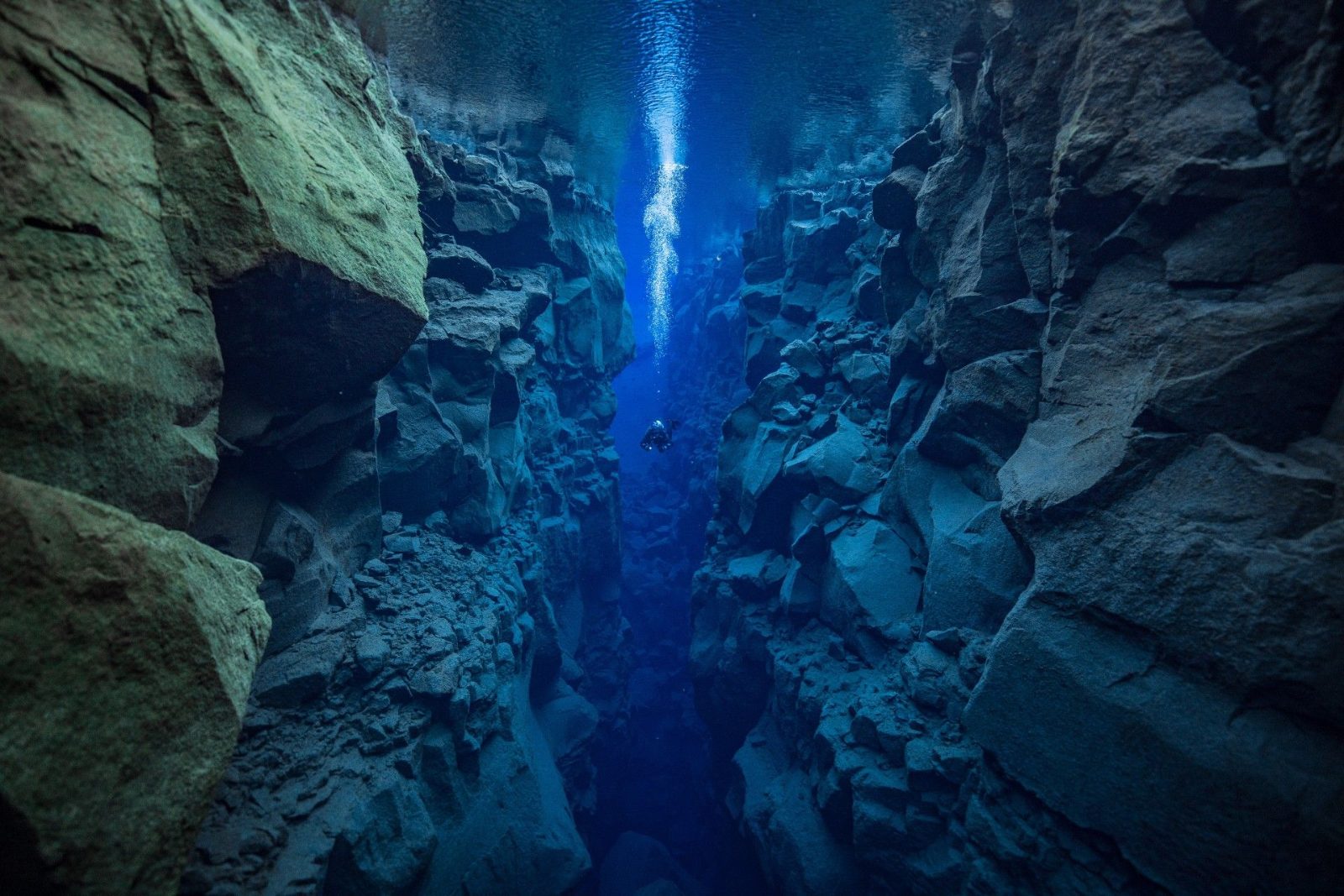
Silfra Cathedral is the deepest and most photogenic-sounding chamber name inside the route, with vertical rock walls that give the impression of a natural nave. The fissure itself widens only by millimeters per year, which makes the setting feel geologically active but slow-moving.
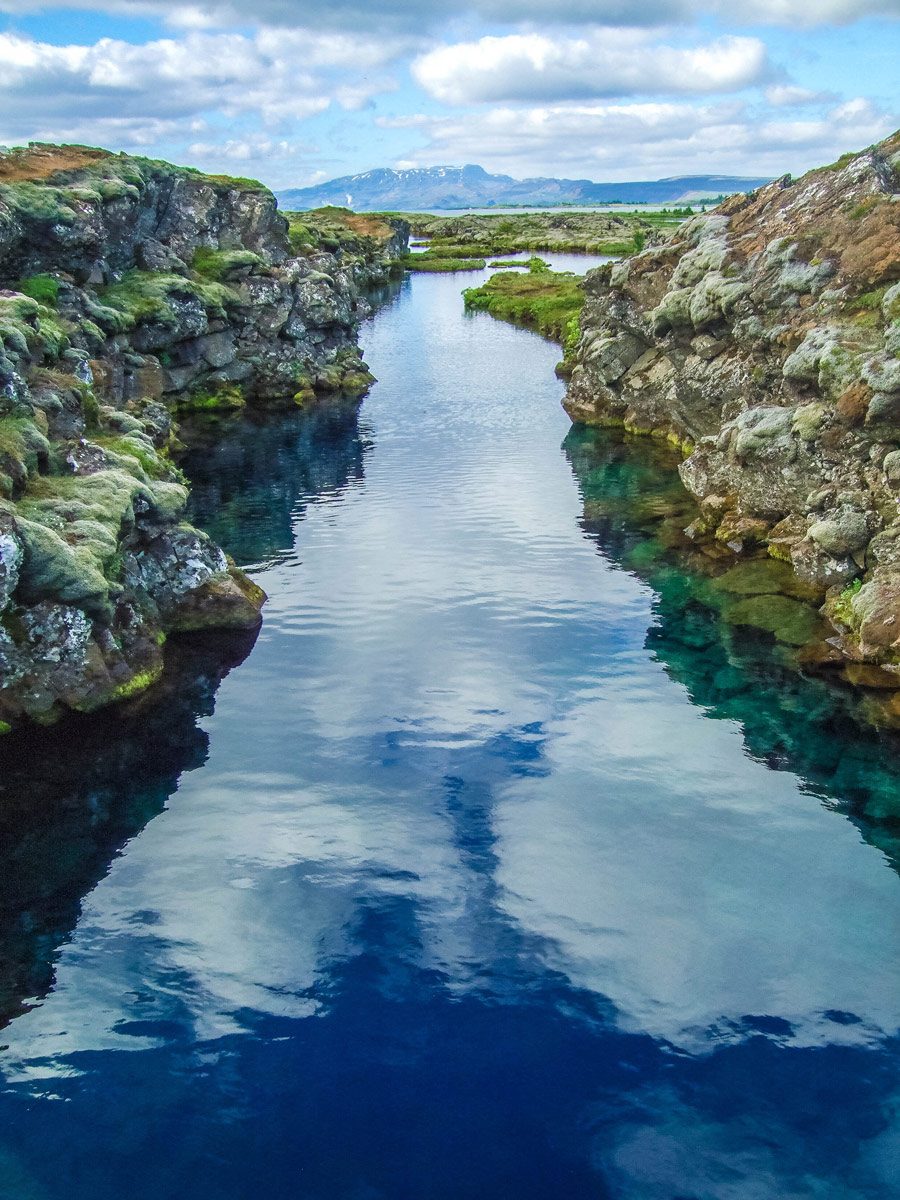
Silfra Lagoon is the calmer final float area where the water feels more open after the tighter rift sections. The site sits within Þingvellir National Park, a UNESCO landscape where the Mid-Atlantic Ridge is visible both above and below the surface.
Big Crack is one of the named openings used to describe the route between larger rock faces. The fissure system is part of a broader plate-boundary zone that spans roughly 5 kilometers in the national park, even though the swim uses only a small section.
Silfra Church is a commonly used place name in the area’s dive map and route vocabulary. It reflects how local naming around the fissure expanded as diving and snorkeling developed, turning the underwater route into a mapped sequence of sections.
You leave Reykjavík early and reach the car park at Silfra by 09:00, inside the 09:00–11:00 arrival window when the boardwalk is quiet and the surface is glass.
You give your name at the meeting point, sign the medical form, and pull on thermal undergarments in the gravel lot while the guide checks seals at wrist and neck.
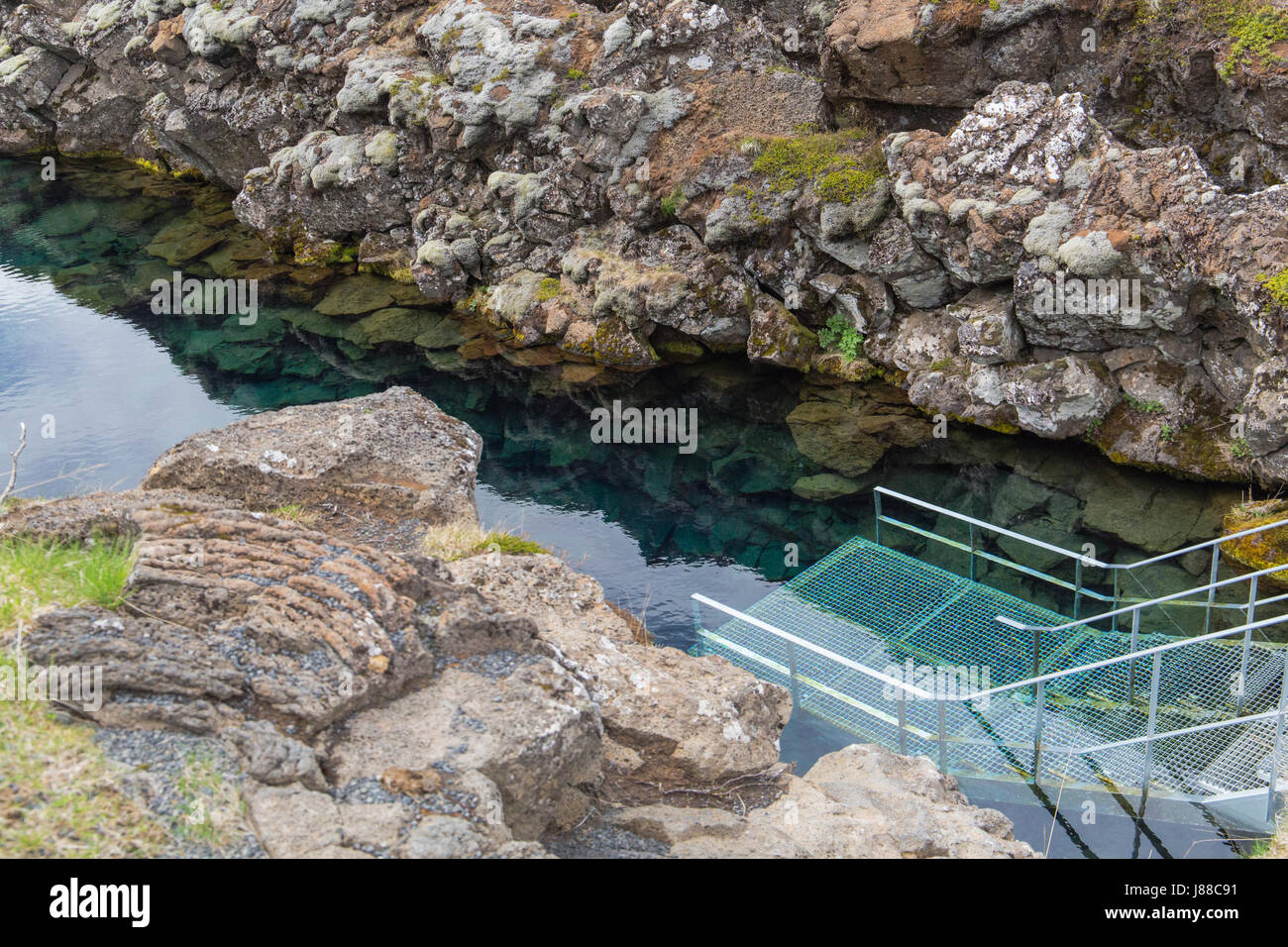
The drysuit goes on in stages: legs, arms, hood. You wait while the neoprene warms. Then you walk about eighty metres to the metal platform, sit on the top step, and lower yourself in feet first. The first breath through the snorkel is the loudest sound you will hear all morning.
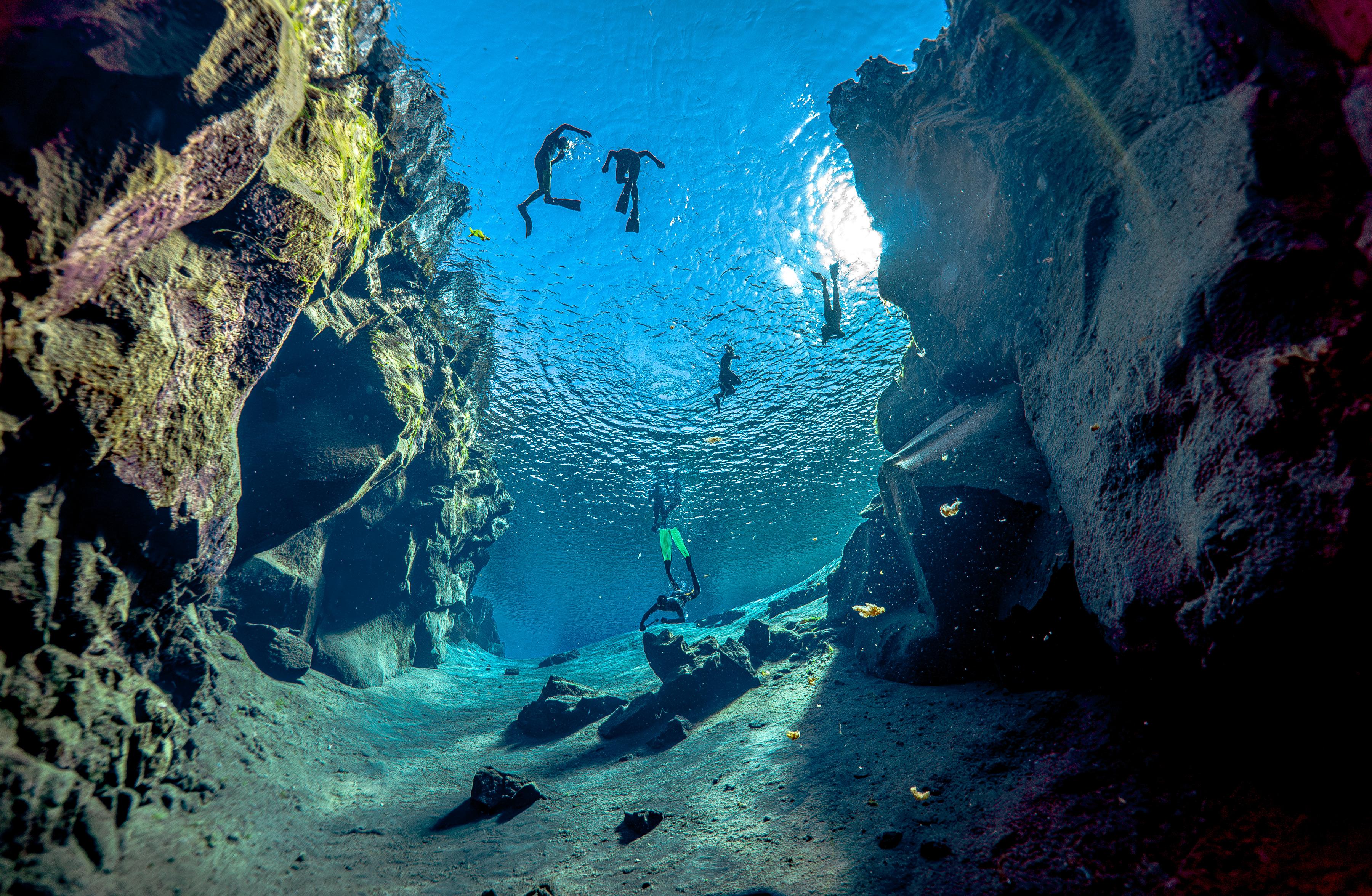
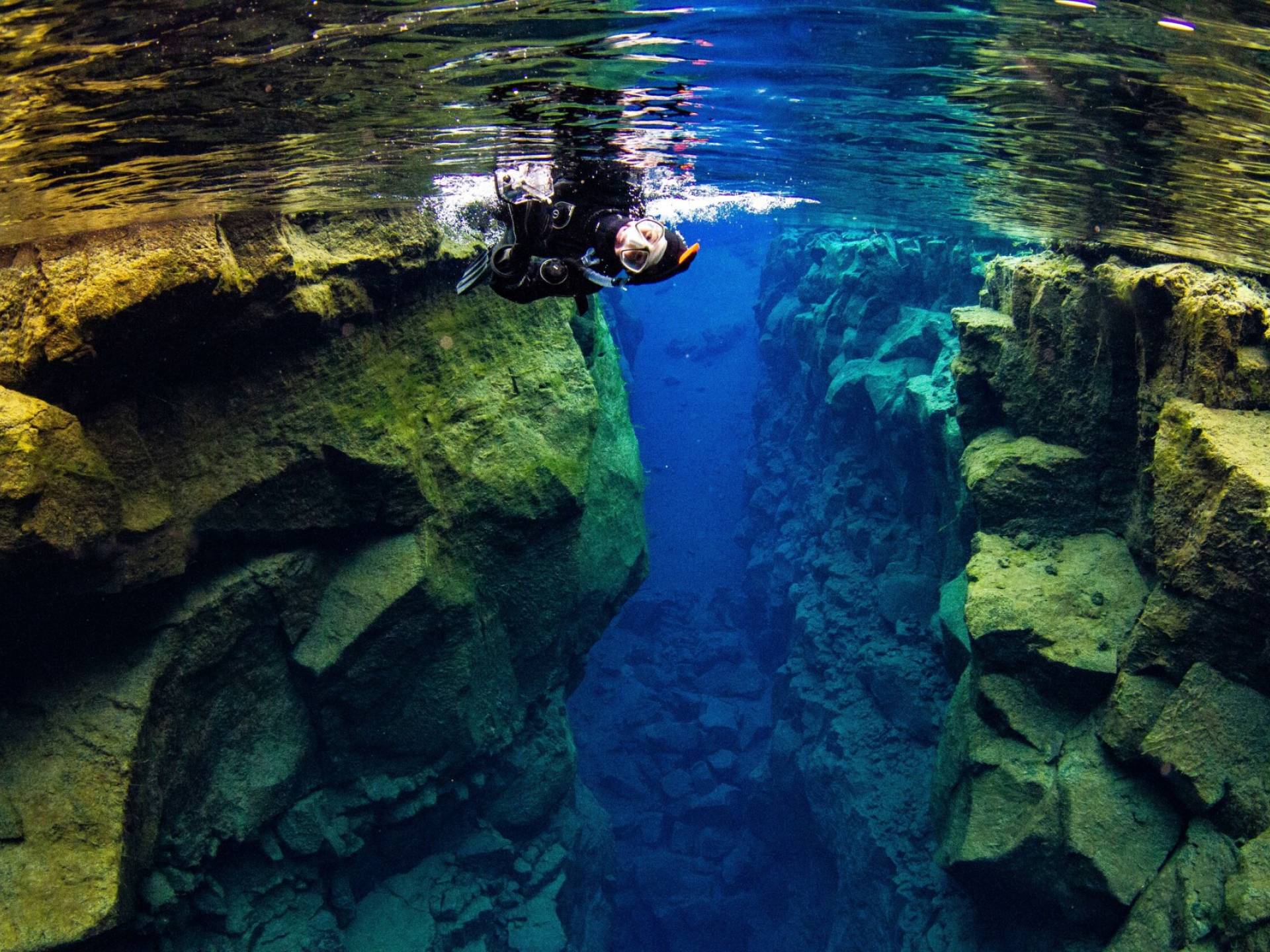
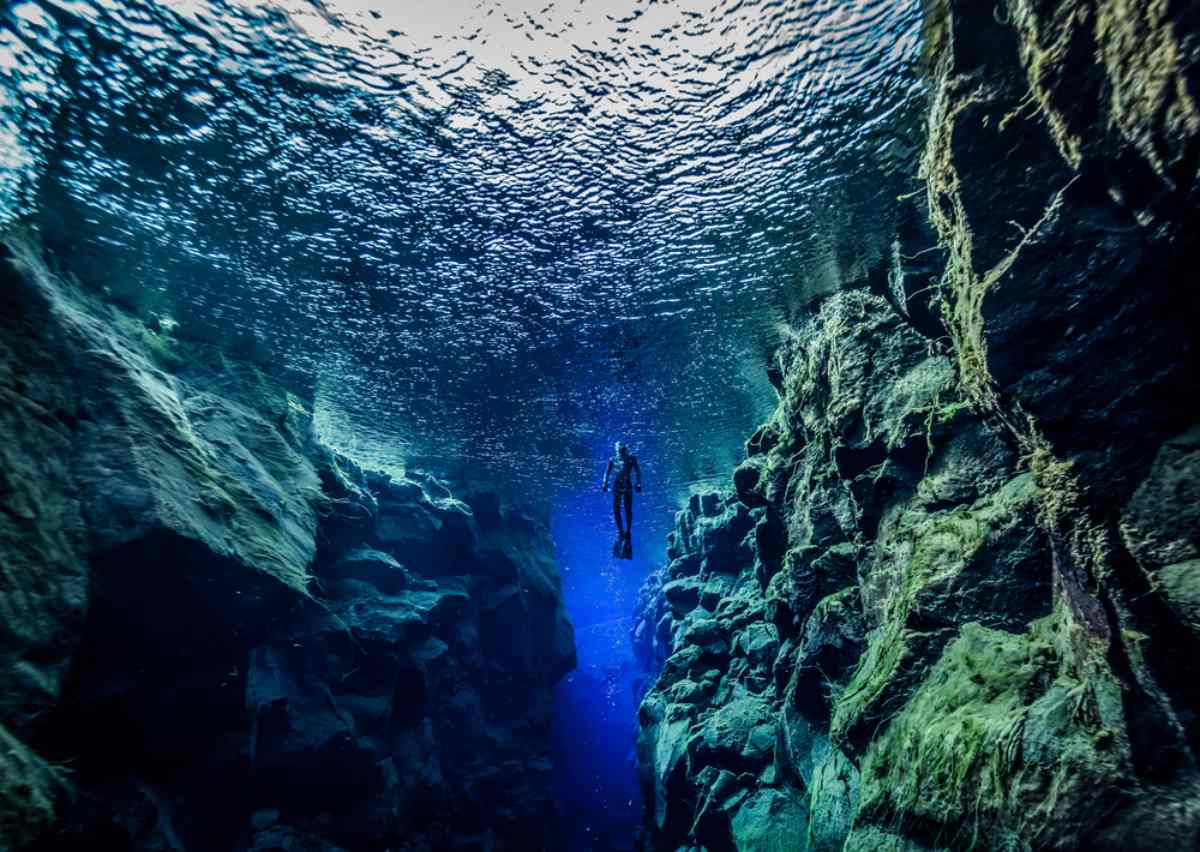
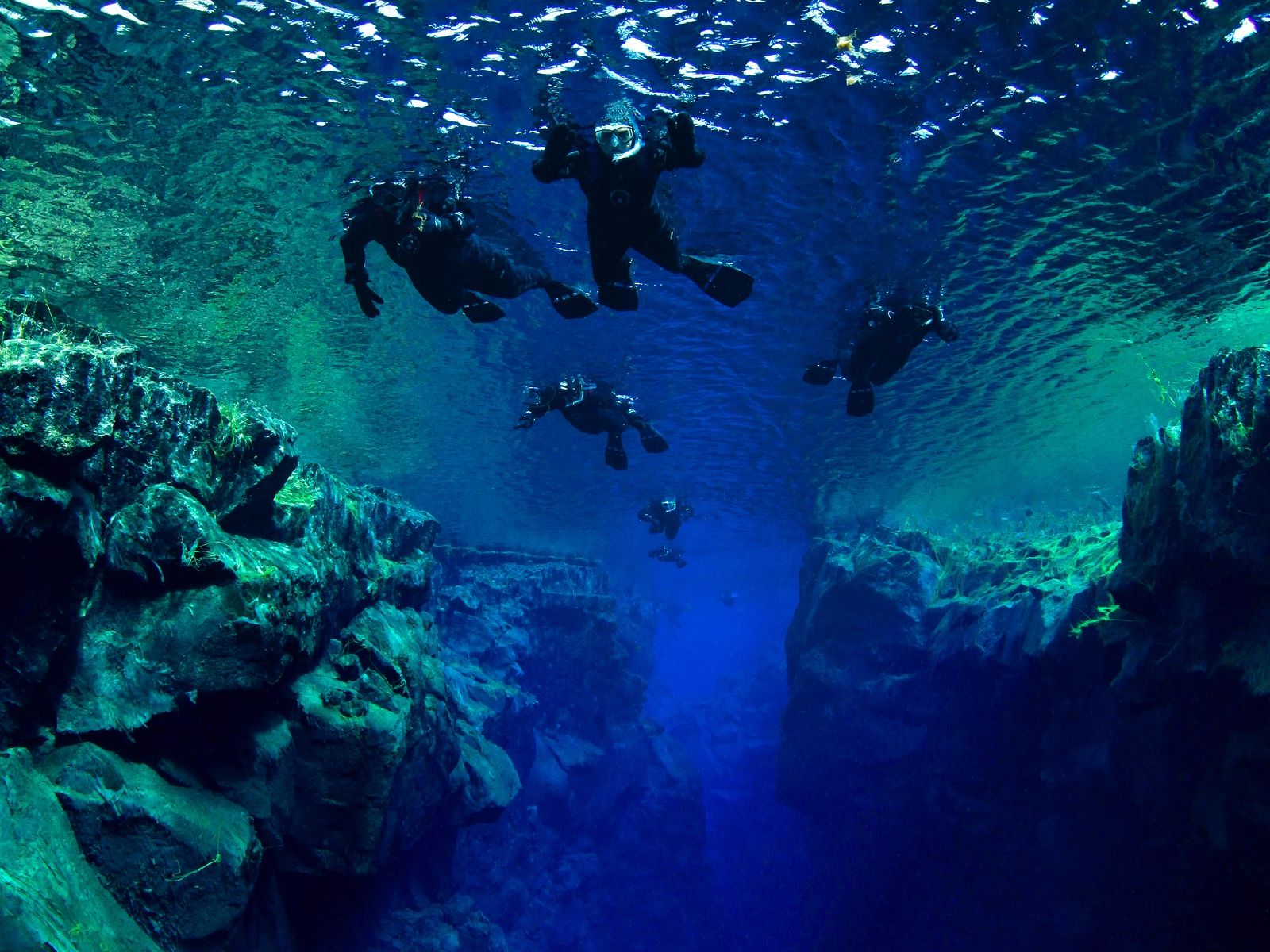
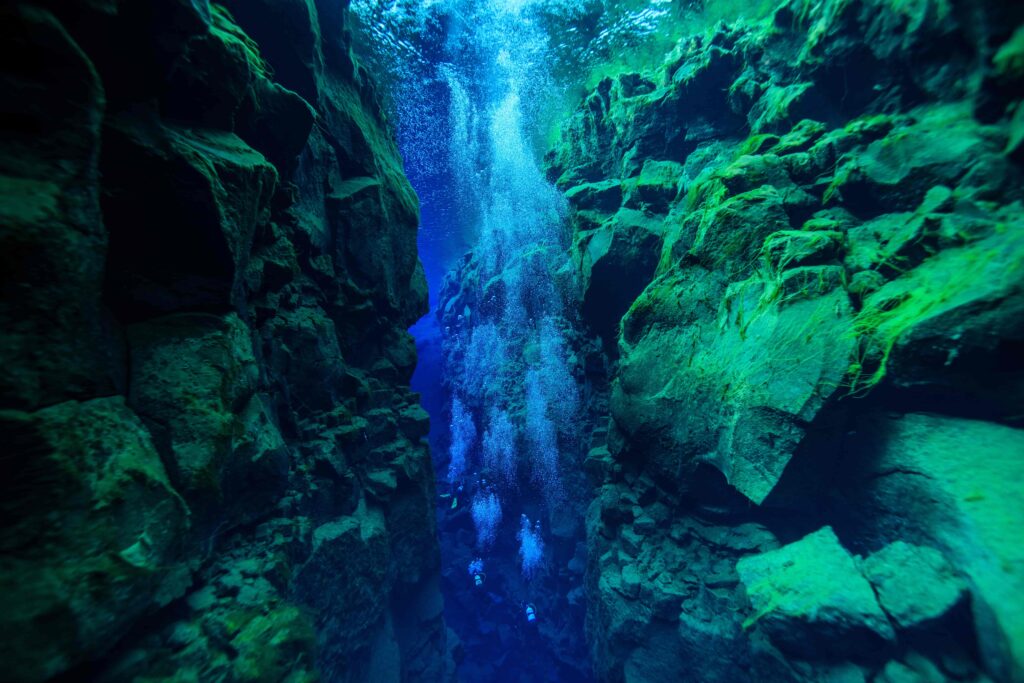
After that, silence. You float face-down and let the current carry you north through Big Crack, where the walls close to a shoulder's width, then out into the wide blue of the Cathedral. You can see the far end of the trench — sixty, eighty, one hundred metres of clear water. A snorkeling in silfra fissure tour ends in the Lagoon, where you stand up in knee-deep water and walk the last stretch. The phrase silfra fissure snorkeling between two continents stops being marketing somewhere around the second wall. You hand back the hood last, and the plain is exactly where you left it.
All the details about your upcoming adventure in one place
Silfra is a water-filled rift inside Þingvellir National Park, where the North American and Eurasian tectonic plates pull apart and glacial meltwater filters through porous lava rock for decades before reaching the fissure. That filtration is why snorkeling in Silfra fissure delivers visibility past 100 metres in water holding steady near 2°C year-round, across sections locals call Silfra Hall, the Cathedral and the shallow Lagoon. Most snorkelflúðir í Silfru operators run from the Þingvellir dive platform, and snorkeling in silfra fissure tickets typically include a drysuit, hood, gloves and full guide supervision.
The water that fills Silfra fell as snow on Langjökull glacier between thirty and one hundred years ago. It travels underground for roughly fifty kilometres, filtered through porous lava rock, before surfacing in the fissure at a steady two to four degrees Celsius.
That slow subterranean journey is why snorkeling in silfra fissure yields visibility measured at close to one hundred metres — among the clearest freshwater anywhere on the planet.
The fissure itself is young. It opened in 1789, when a series of earthquakes dropped the floor of the Þingvellir rift valley by around two metres and cracked the lava field along the boundary between the North American and Eurasian plates. Silfra is one wound among many in that rift, but it is the one that connected to the groundwater system feeding Lake Þingvallavatn. Icelanders named it for silver; snorkl í Silfru is the local phrasing. The rift widens by roughly two centimetres a year, so the walls stand marginally farther apart with each passing decade.
Þingvellir carries older weight. The Alþingi, one of the world's oldest parliaments, convened on this plain from 930 until 1798, and UNESCO inscribed the site as World Heritage in 2004 for that assembly ground rather than for its geology. Þingvellir diving arrived late. Recreational access to the fissure began in earnest in the 1990s, and today snorkeling in silfra fissure tours operate under park permits that cap group sizes and require certified guides. The four named sections — Silfra Big Crack, Silfra Hall, Silfra Cathedral and Silfra Lagoon — are traversed in that order by the current, which pushes gently north toward the shallow lagoon.
Public fascination has outpaced the science. Threads filed under silfra fissure snorkeling reddit trade notes on visibility and current, searches for silfra fissure snorkeling death reflect the park's strict guiding rules rather than routine risk, and a silfra fissure snorkeling tour with underwater photos has become the standard record of the crossing. The Þingvellir authority lists diving among its official activities at thingvellir.is, and the park gates carry no entrance fee — 0 ISK — though operators charge a guest fee. Demand for snorkeling in silfra fissure tickets follows the light: longest days, clearest water, most boots on the boardwalk. What draws people remains constant. Between the two rock walls lies a gap that belongs to neither continent, and it is measurably growing.
Between the two rock walls lies a gap that belongs to neither continent.
Snorkeling in Silfra fissure requires full cold-water exposure protection: a thick wetsuit or dry suit, plus hood, gloves, and neoprene shoes or socks. The official park rules note water temperatures around 2–4°C, so layered thermal clothing under the suit is standard practice.
For snorkeling in Silfra fissure, leave bulky bags in your vehicle or with the operator if they provide a staging area at P5/meeting point. The national park’s own service desk sells diving permits, and the Silfra parking/meeting setup is designed for quick gear changes rather than long-term storage.
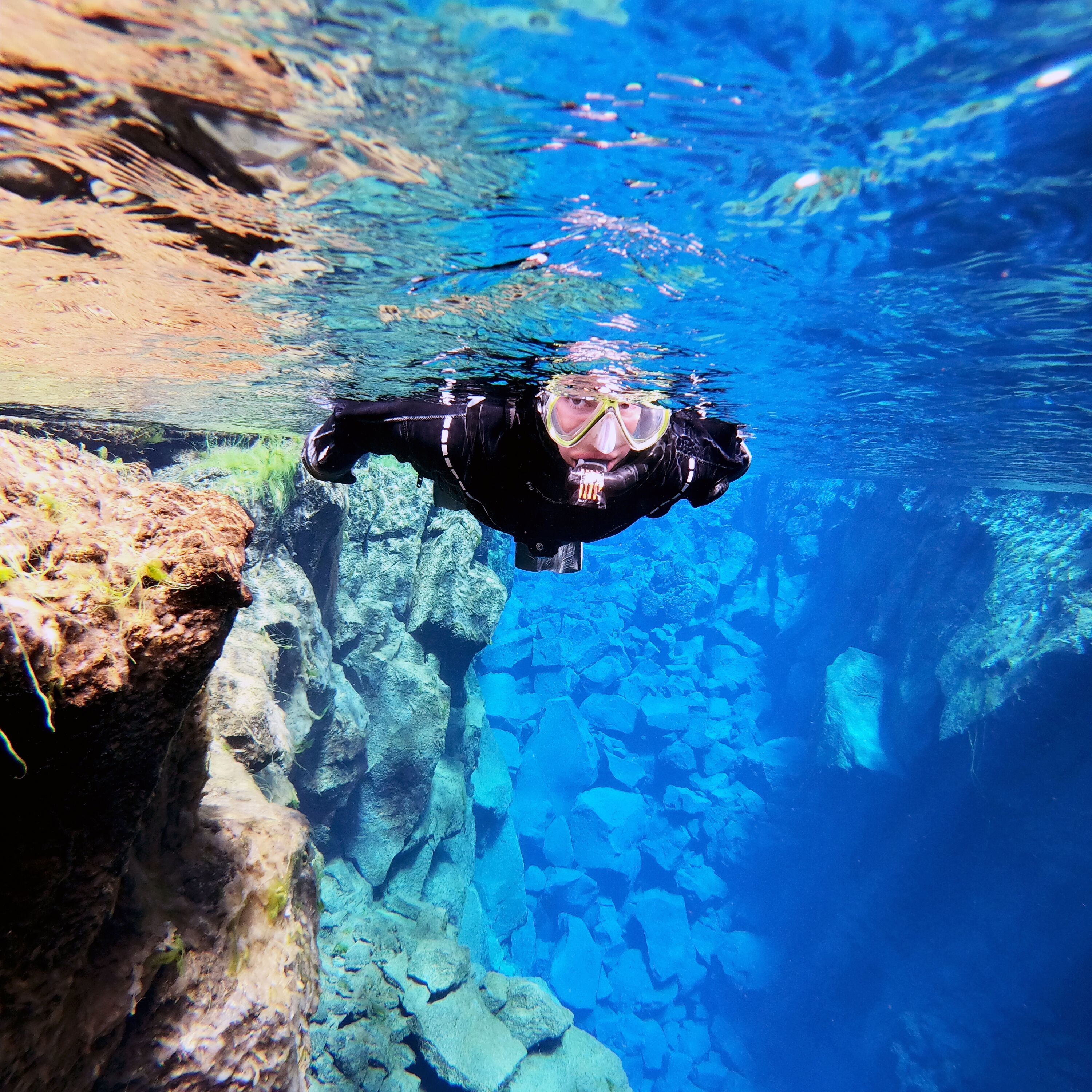
For snorkeling in Silfra fissure, handheld waterproof cameras and action cams are the practical choice, but only if they do not interfere with gear or group safety. Commercial filming and photographing in Þingvellir require a separate permit from the park.
Snorkeling in Silfra fissure is usually treated as an age- and fitness-dependent activity, because it is cold, supervised, and equipment-heavy. Families should confirm minimum age, height, and swimming requirements directly with the tour operator before booking.
Silfra is an outdoor cold-water activity, so mobility needs are shaped by uneven paths, wetsuit changes, and getting in and out of the water from platforms. The park does not present it as a wheelchair-accessible experience, so visitors with mobility limits should confirm transfer and entry logistics with the operator in advance.
Food and drink should stay out of the water and off the briefing area unless your operator explicitly allows sealed water bottles. The national park pages focus on permits and safety, not picnic-style use at Silfra, so plan to eat before or after the session.
Hours
Mon–Sun 09:00–17:00 at Silfra fissure, with the park service desk and booking flow centered on Þingvellir National Park.
Address
Silfra fissure, Þingvellir National Park, 806 Selfoss, Iceland.
Entry
Entrance fee 0 ISK; a guest fee applies, amount not stated.
Best arrival
09:00–11:00 for fewer people and calmer conditions.
Phone
+354-488-1800 for the park office.
Silfra permit bookings at Þingvellir are non-blanket local-purchase items, and the park page states that visitors dive or snorkel at their own risk. Because the official fee listed for entry is 0 ISK and the guest fee amount is not stated, refund timing depends on the operator’s own policy rather than the park fee page; check the operator terms before paying.
Recommended time
2-3 hours
For snorkeling in silfra fissure, plan on about 2-3 hours on site so you have time for check-in, the safety briefing, gearing up, the water session, and a short debrief. That usually fits the standard flow without feeling rushed, and it leaves a little buffer if your group needs extra time with drysuits, masks, or cold-water layering. Arriving in the morning is the smoothest option, and the official best arrival window is 09:00–11:00. If you want a quieter pace, book the earlier slot; later in the day, lines and group overlap tend to build as more tours stack up. The official Þingvellir site also notes diving and snorkeling are done with a buddy and proper cold-water equipment, so the handoff before entering the water is part of the time budget.
Crowd levels through the day
Narrow opening where the plates sit closest together, with dark lava walls and strong leading lines for a tight underwater frame. Stand just inside the narrowest section and angle toward the split between the tectonic plates for the clearest geology shot; access is only on a guided route. best_time: Before 09:00
A wider corridor with boulders and more breathing room in the composition, good for a swimmer-in-frame shot that shows scale. Shoot from mid-water while facing down the corridor so the layered rock walls read clearly behind the snorkeler; the section is part of the standard guided path. best_time: Morning light
Long blue corridor with near-vertical lava walls and the strongest sense of depth, ideal for silhouette-style images and wide-angle underwater shots. Position yourself low in the water and look straight through the corridor to emphasize the 100-meter sightline; this is a key highlight on snorkeling in silfra fissure tours. best_time: Early morning
The most open and calm-looking finish, with brighter turquoise water and a cleaner background for portraits at the end of the route. Frame the snorkeler against the pale bottom and open water near the exit side; this section is often the easiest place to hold steady for snorkeling in silfra fissure tour photos. best_time: Before 11:00
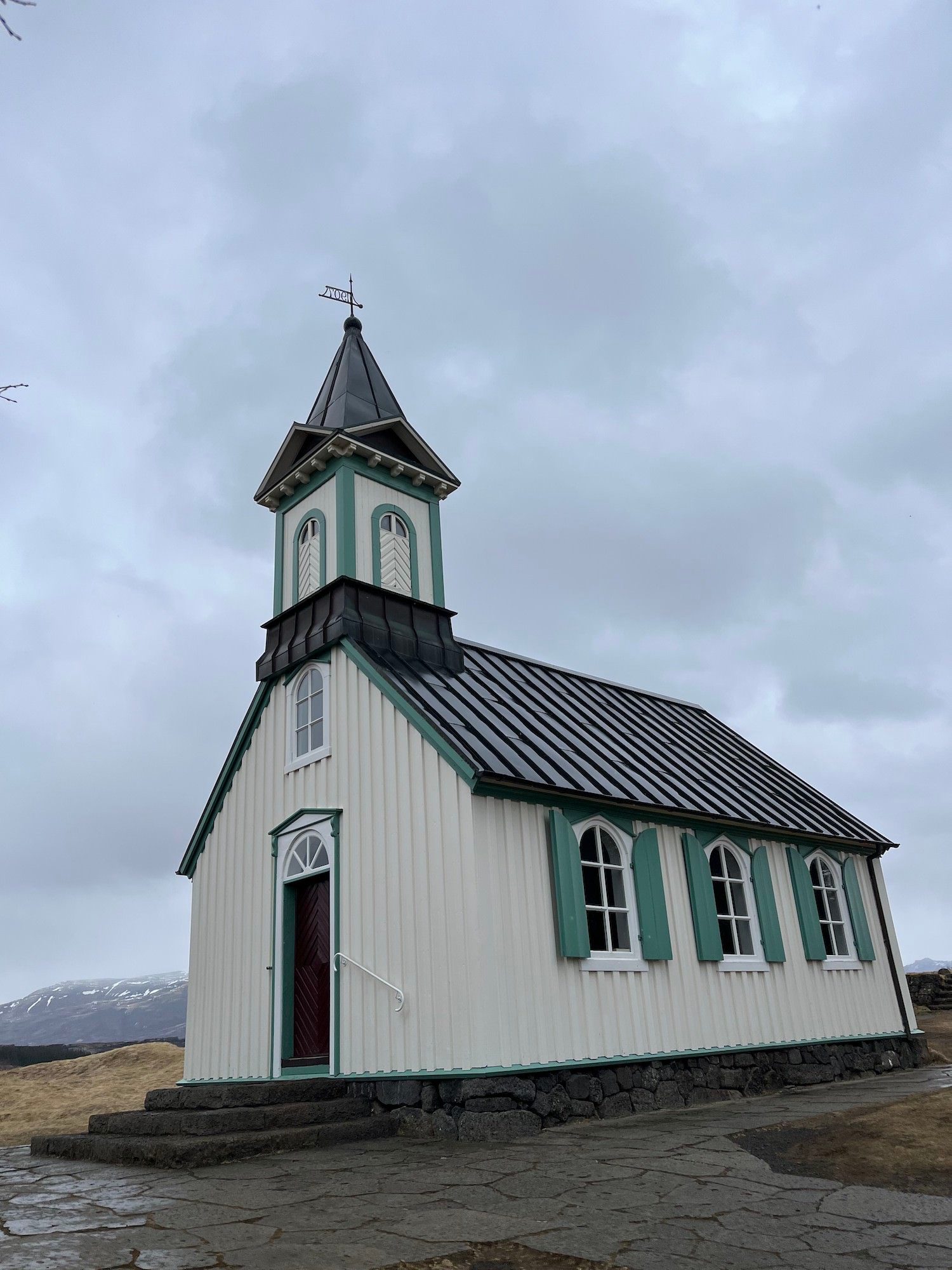
A practical surface-side angle for arrival or exit shots, showing the lagoon edge and the controlled end point of the route. Stand back on the platform to capture the entering or exiting group without crowding the waterline; useful when asking about snorkeling in silfra fissure tickets and photo add-ons. best_time: Before 09:00
Snorkeling in silfra fissure is usually a structured outing rather than a casual family stop, so it works best for families with older children and teens who are comfortable in cold water and listening to a guide. Because the water is clear but very cold, mixed-age groups should plan for a slower pace and a strong adult-to-child supervision ratio.
Not practical at the fissure itself. The trail and entry area are built for walking in technical gear, not pushing a stroller, so plan to leave one in the car or use a carrier for younger children.
This fits confident older kids better than small children, especially because the experience depends on tolerating cold water and wearing a hood, gloves, and neoprene socks. Families with younger children often do better splitting up, with one adult staying nearby.
The park’s diving page says registration can be done online, at the Leirar service center, or at Gestastofa Hak, but it also states that the park does not provide snorkel equipment. That means families should arrive fully prepared and not count on on-site rentals.
Use the best arrival window, 09:00–11:00, if you want a calmer start and fewer people around the access point. For a family trip, that makes the logistics feel easier and gives kids less time waiting in the cold.
Bring water and a simple snack for after the session, since the family-friendly plan here is to get everyone warm again quickly once you are done. If a child is unsure, keep the day flexible and enjoy the Þingvellir National Park landmarks instead of forcing the outing.
After snorkeling in silfra fissure, the easiest food stop is the café at Þingvellir’s Service Centre, which sits inside the park and works well for coffee, soup, and a quick warm-up before the drive onward. If you want a fuller meal, most visitors add a short Golden Circle detour to one of the farm or café stops on the route.
This is the closest practical stop for snorkeling in silfra fissure tours, with hot drinks and simple lunch plates at Þingvellir’s Service Centre. It is the best fit when you want a fast meal before leaving the park, and it can be busier around midday.
A popular farm stop on the Golden Circle where you can sit down for lunch and dessert after a snorkel tour. Order something warm and save room for ice cream; it is a good break if you are continuing toward Geysir or Gullfoss.
A greenhouse restaurant that works well as a planned lunch on the drive after snorkeling in silfra fissure. Tomato soup and bread are the signature choice, and advance booking is smart because tables fill quickly.
A straightforward option in the wider Þingvellir–Laugarvatn area for a sit-down meal after the tour. It suits travelers who want a relaxed dinner-style stop rather than a grab-and-go café.
Real experiences from real travelers
We arrived for the 8am slot and the light was still low over the lava field, which made the entry stairs feel colder than they looked. Once you are floating, the visibility is the whole story — I could count stones on the bottom fifteen metres down. Booking snorkeling in silfra fissure with the earliest departure meant we shared the rift with only one other group.
The drysuit kept my body warm the whole 40 minutes but nobody warns you properly about the cheeks and lips, since the glacial meltwater sits at about 2C year round. My guide walked us through the Þingvellir plate boundary before we got in, which made the Cathedral section land differently. Worth doing the Silfra fissure tour even if you are not a strong swimmer, because the current carries you.
Floating between the North American and Eurasian plates in water filtered through lava rock for decades is a strange thing to describe to people back home. Midsummer meant near-endless daylight, so our late-afternoon slot still felt like midday. The silfrugjá crew handled all the gear fitting and we only carried our own towels.
March wind across Þingvallavatn made the walk back to the changing area the coldest part of the whole thing, not the swim. Visibility in the meltwater was untouched by the weather, which surprised me. The one downside was the queue at the entry platform when three groups overlapped.
Do not expect marine life — this is a rift filled with filtered glacial meltwater, so what you get is silence, troll hair algae on the rocks and blue that goes from teal to almost black. Our guide pointed out where the plates have visibly drifted apart. I bought snorkeling in silfra fissure tickets three weeks ahead and every slot around ours was already full.
Late January, snow on the moss, and our group of four had the whole lagoon to ourselves for the last ten minutes. Getting sealed into the drysuit takes longer than the swim itself, so budget patience. Snorkeling in silfra fissure in deep winter gave us light I have not seen anywhere else, low and pink across the water.
The gentle current from the Langjökull meltwater does most of the work — the guides tell you to keep your arms folded and just let it move you down the fissure. Autumn light hit the basalt walls sideways and the Cathedral section looked bottomless. Easily the strangest 45 minutes of our Iceland trip.
You can drink straight from the rift, which our guide demonstrated by tipping her head back mid-float. November afternoon, grey sky above, but underwater the colours were untouched. The Þingvellir snorkelling excursion runs regardless of overcast conditions, and the clarity never changed.
The dry gloves were the difference between comfortable and miserable — my partner chose wet gloves and regretted it by the second lagoon. Icelandic snorkelling like this is more about stillness than activity, and I did not expect that. Everything about our snorkeling in silfra fissure booking ran on time, from pickup to the hot chocolate at the end.
Frost on the boardwalk, breath fogging the mask, then absolute quiet once your ears go under. Comparing snorkeling in silfra fissure tours across operators, the small-group ones seemed to spend more time in the Cathedral and less time waiting. Rinse your mask in the water before you start or you will spend the whole drift half-blind.
Everything you need to know for your journey
Silfra fissure follows the park’s daily opening pattern of 09:00–17:00, and the official recommended arrival window is 09:00–11:00. That is the safest planning window for snorkeling in Silfra fissure if you want calmer conditions and fewer people. Yes. The official Þingvellir information for Silfra lists the same opening hours every day, Monday through Sunday, so snorkeling in Silfra fissure is not limited to a weekend schedule. Individual tour departures still depend on the operator. The park’s listed entrance fee is 0 ISK, though a guest fee applies and the amount is not stated on the attraction page. For snorkeling in Silfra fissure, any guided-tour price is separate from park access. The park parking and Silfra pages point visitors to P5, Valhöll, which is the parking lot nearest Þingvellir Church and Silfra fissure. For snorkeling in Silfra fissure, this is the practical meeting area used by most operators. Wear cold-water exposure protection: a thick wetsuit or dry suit, plus hood, gloves, and neoprene shoes or socks. The official rules for snorkeling in Silfra fissure reference water temperatures around 2–4°C, so standard swimwear alone is not enough. Yes, but only if your camera setup is compact and does not interfere with gear or safety. Commercial filming and photographing in Þingvellir needs a separate permit, so snorkeling in Silfra fissure with pro-level equipment is a different case from a simple action cam. Silfra snorkeling is not a generic family beach activity; it is a supervised cold-water excursion with gear, fitness, and age requirements that vary by operator. Families interested in snorkeling in Silfra fissure should verify minimum age and swimming requirements before booking. Leave out large bags, loose valuables, and anything that can complicate the gear change or water entry. The park’s Silfra guidance centers on safety and permit compliance, and snorkeling in Silfra fissure works best with only essential items. The best timing is the morning window of 09:00–11:00, when the site is generally calmer. For snorkeling in Silfra fissure, summer brings the busiest Golden Circle traffic, while shoulder-season visits can feel less crowded. By car, use Route 36 toward Þingvellir National Park and follow signs to P5/Valhöll for Silfra. Public transport is limited for a precise snorkeling in Silfra fissure schedule, so most visitors arrive by rental car or guided transfer rather than regular local bus. Tour and permit terms are operator-specific, but the park’s own policy states that diving and snorkeling are at the visitor’s own risk. For snorkeling in Silfra fissure, check the booking terms before paying because the park page does not publish a universal refund window.
Please contact us for more information.
Join thousands of happy travelers who have discovered this incredible experience
Book Your Experience Now