3 hr
Silfra Fissure Snorkeling Adventure with GoPro Photos
- Entry ticket
- Mobile voucher
- Valid same day
- Free cancellation
Silfra Fissure Snorkeling from Reykjavik — Drysuit Tours with Round-Trip Transfers
Two continents drift apart, and you float in the gap.
Compare fares, pick the fit — all bookings are mobile-voucher and eligible for free cancellation where shown.
3 hr
5 hr 30 min
6 hr
For silfra fissure snorkeling from reykjavik, the choice is usually between the official park permit and the booking option tied to a guided transfer day tour. Þingvellir National Park sells diving and snorkeling permits, while the transport-inclusive experience is typically handled by tour operators rather than the park itself.
| Park permit Self-arrival, official entry |
Top pick Guided snorkeling tour Round-trip transfer from Reykjavik |
|
|---|---|---|
| Access method | Self-drive to Silfra | Coach pickup from Reykjavik |
| Included areas | Silfra access only | Silfra access plus transfers |
| Wait time | Choose your own arrival time | Fixed tour departure time |
| What's included | Park permit, no transport | Guide, gear, transfers |
| Booking place | Thingvellir National Park | Tour operator checkout |
| Best for | Independent visitors | First-timers without a car |
| See tickets & prices |
Verdict: If you want the simplest first visit, pick the guided Reykjavik transfer option; if you already have transport and only need official access, the park permit is the cleaner fit for silfra fissure snorkeling from reykjavik tours and similar silfra fissure snorkeling from reykjavik tickets.
Worth it for confident swimmers chasing rare geology
Silfra fissure snorkeling from Reykjavik costs you a half-day and a guided cold-water swim in roughly 2°C glacial meltwater, filtered for decades through Þingvellir lava rock until visibility runs past 100 metres. What you actually buy is drysuit instruction, a certified guide, park access on top of the 1,000 ISK parking service fee per car, and about 30 minutes floating between the North American and Eurasian plates. The payoff is uniqueness rather than adrenaline: there is no comparable rift-valley snorkel anywhere else, and the Þingvellir setting is UNESCO-listed. Guided tours from the capital pay off best for reasonably fit travellers who want one signature Iceland memory and can tolerate a numb face for 20 minutes. Nervous swimmers, anyone under a drysuit's medical or height limits, and travellers on a tight single-day schedule will get more from a Golden Circle day tour instead.
Bottom line: If you can handle cold water and want something Iceland alone can offer, book a silfra fissure snorkeling from reykjavik tour; otherwise put the money toward the Golden Circle.
They complement each other, but silfra fissure snorkeling from reykjavik is the better fit for most casual visitors because it is easier to join without dive credentials, while Thingvellir diving suits certified divers who want a deeper, more technical rift experience.
|
Top pick Silfra snorkeling |
Thingvellir diving | |
|---|---|---|
| Skill requirement | Beginner-friendly swimming | Advanced buoyancy control |
| Certification needed | None | Diving license and dry suit cert |
| How you experience the fissure | Surface snorkel in clear water | Full scuba dive through rift |
| Typical traveler fit | Casual sightseeing travelers | Certified adventure divers |
| Accessibility from Reykjavik | Day tour with transfers | Self-drive or arranged transfer |
| Wetness and gear | Thick wetsuit; face stays dry | Dry suit; fully submerged |
| See tickets & prices |
Verdict: If you want the simplest way to experience Silfra from Reykjavik, snorkeling is the easier choice; if you already dive and want a more technical encounter, Thingvellir diving is the stronger match.
Hand-picked experiences loved by thousands of travelers
4.5 hours
Free Cancellation
Float between tectonic plates in Thingvellir's crystal-clear glacial waters with included Reykjavik transport and photos.
7 - 8.5 hours
Free Cancellation
Discover Iceland's iconic Golden Circle, including Gullfoss, Geysir, Thingvellir, and the colorful Kerid Crater.
10 hours
Free Cancellation
Discover Iceland's iconic geothermal wonders, walk along a volcanic crater, and soak in the historic Secret Lagoon.
10 hours
Free Cancellation
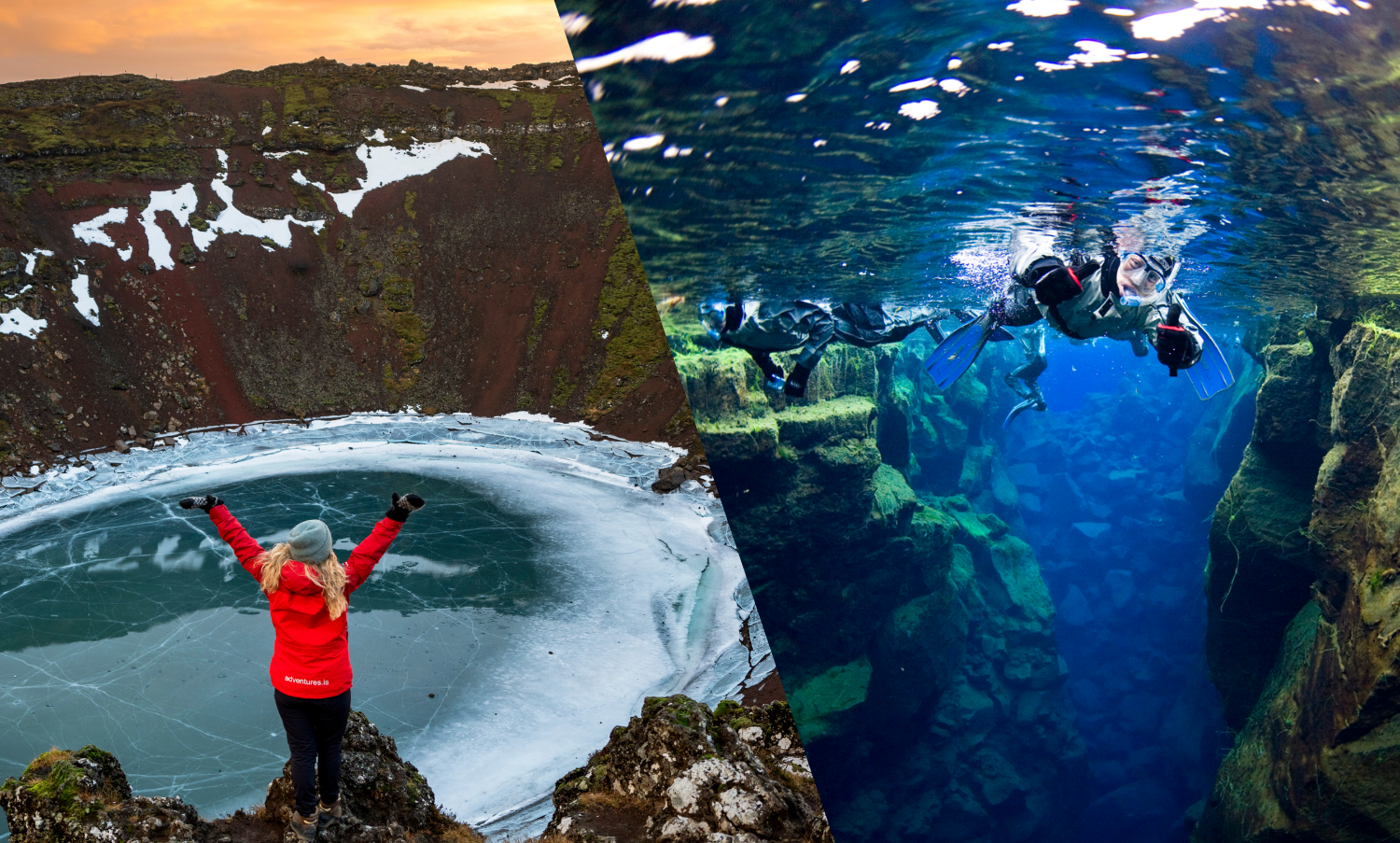
Discover Iceland's dramatic Golden Circle and snorkel between continental plates in the crystal-clear waters of Silfra.
5 - 10 hours
Free Cancellation
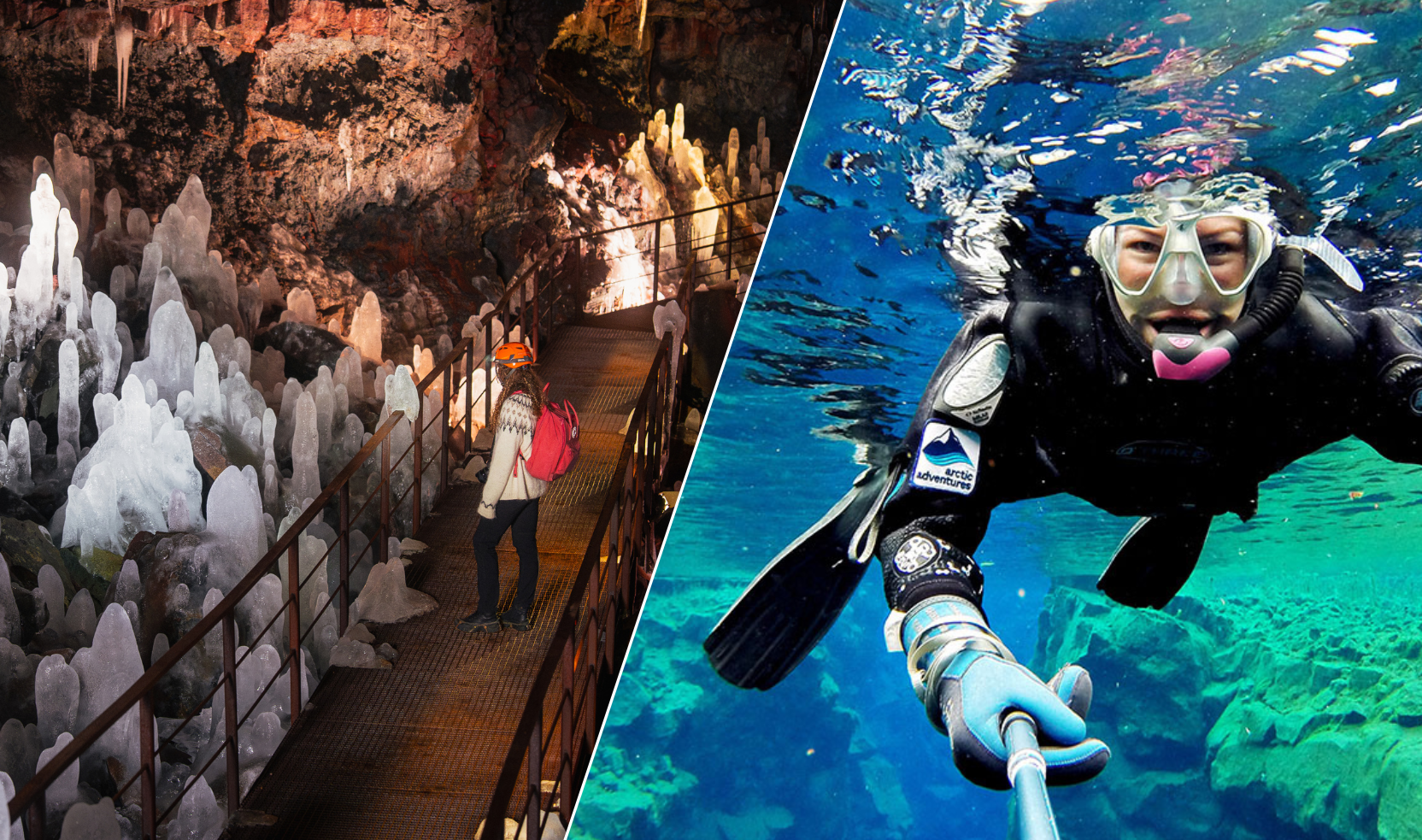
Discover Iceland from the inside out: explore a volcanic lava tube and snorkel between continental plates.
10 hours
Free Cancellation
Snorkel between tectonic plates in Silfra, then tour Iceland's Golden Circle in one epic day.
8 hours
Free Cancellation
Snorkel between tectonic plates in glacier-fed water, then ride Icelandic horses across scenic countryside.
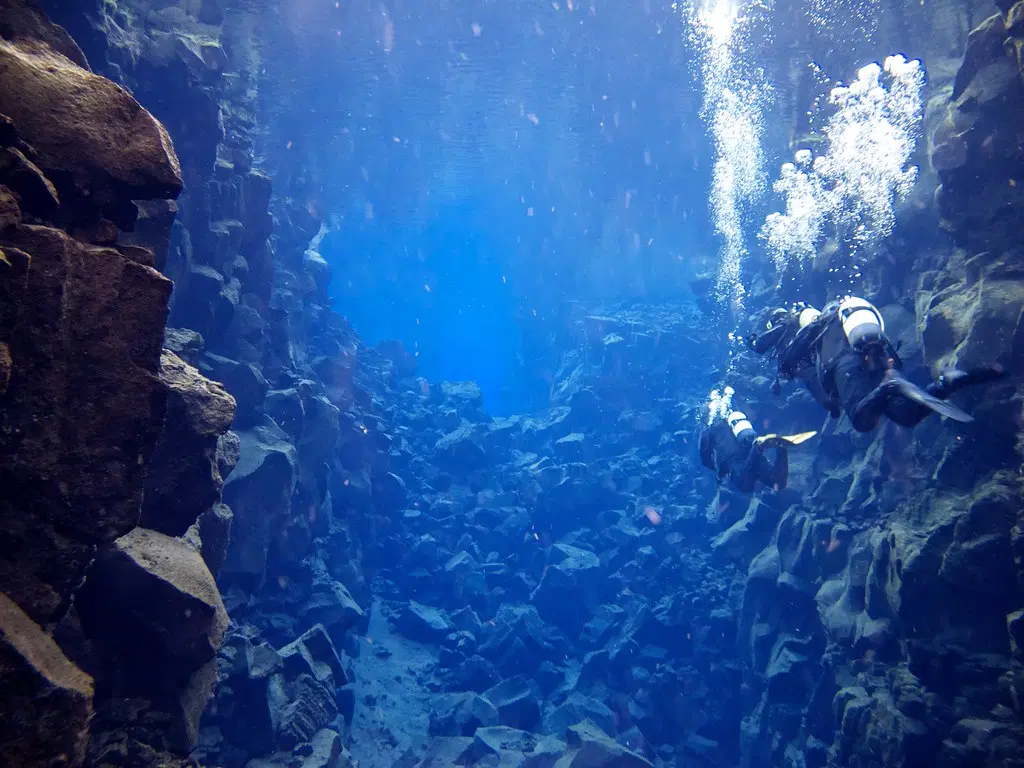
This is one of the best-known submerged chambers in the rift, formed by lava flows and tectonic movement over roughly 9,000 years. Visibility in the spring-fed water is often cited at about 100 meters, which is why many snorkelers remember the place as a clear-water corridor rather than a normal pool.
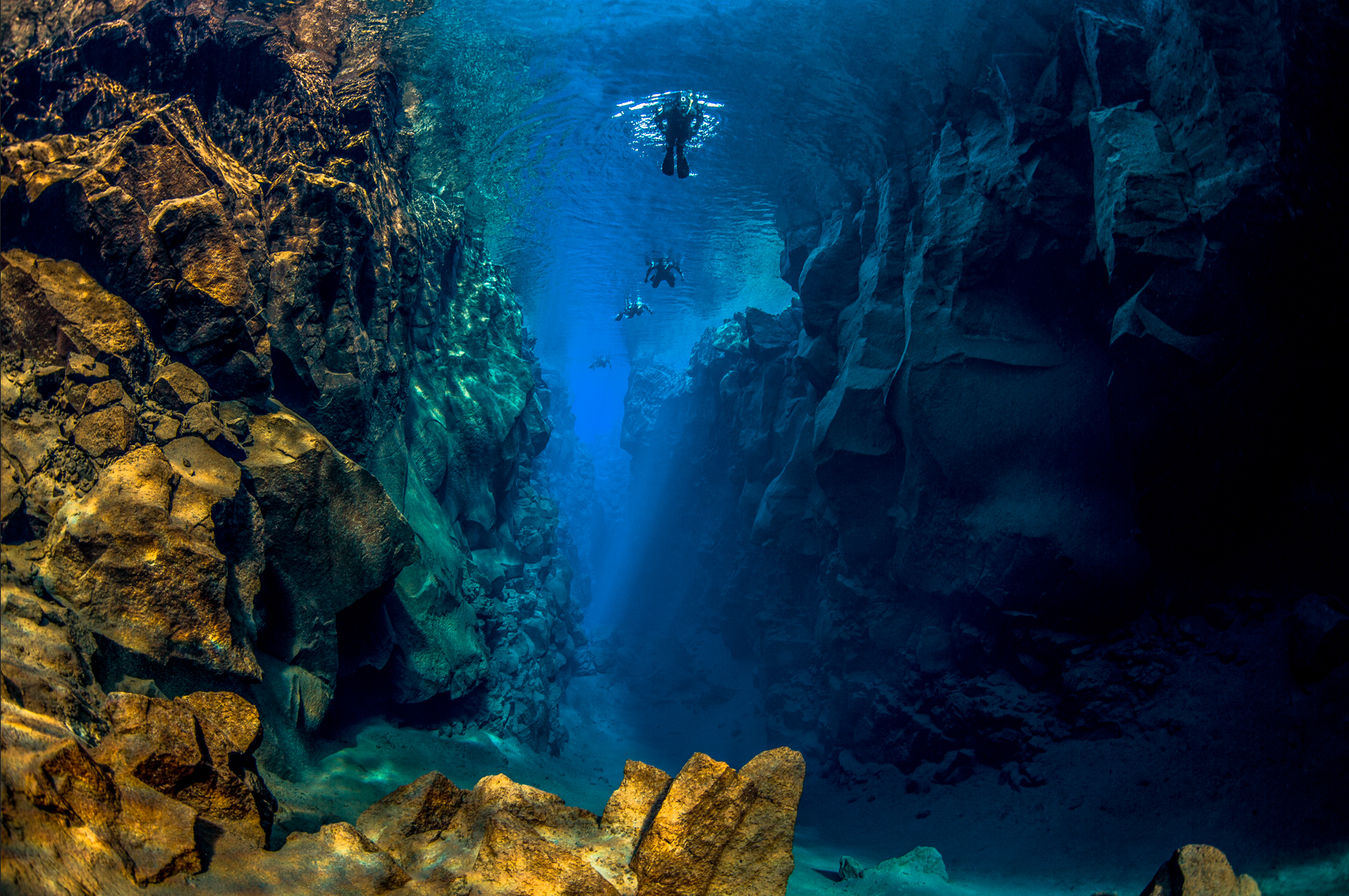
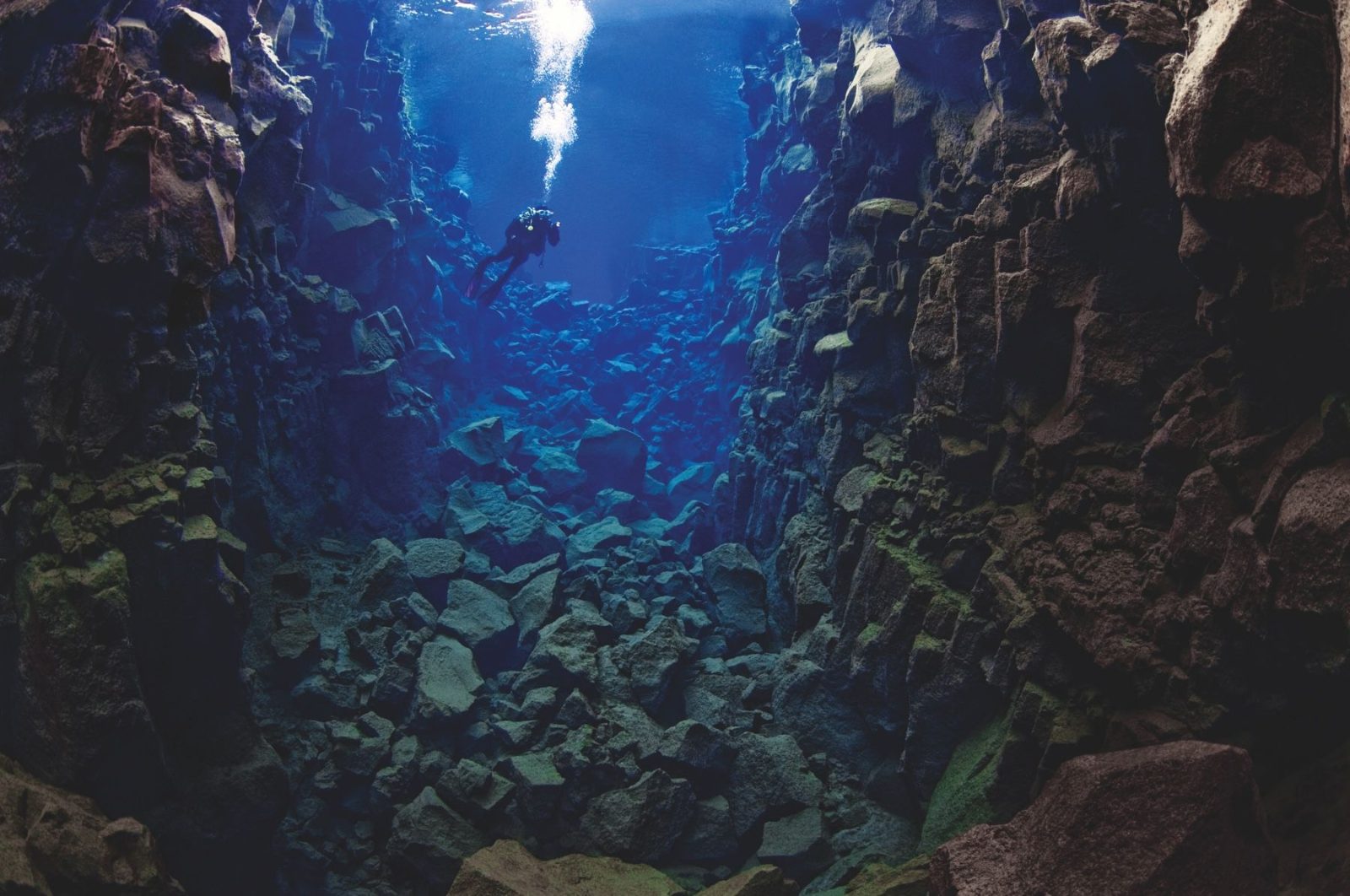
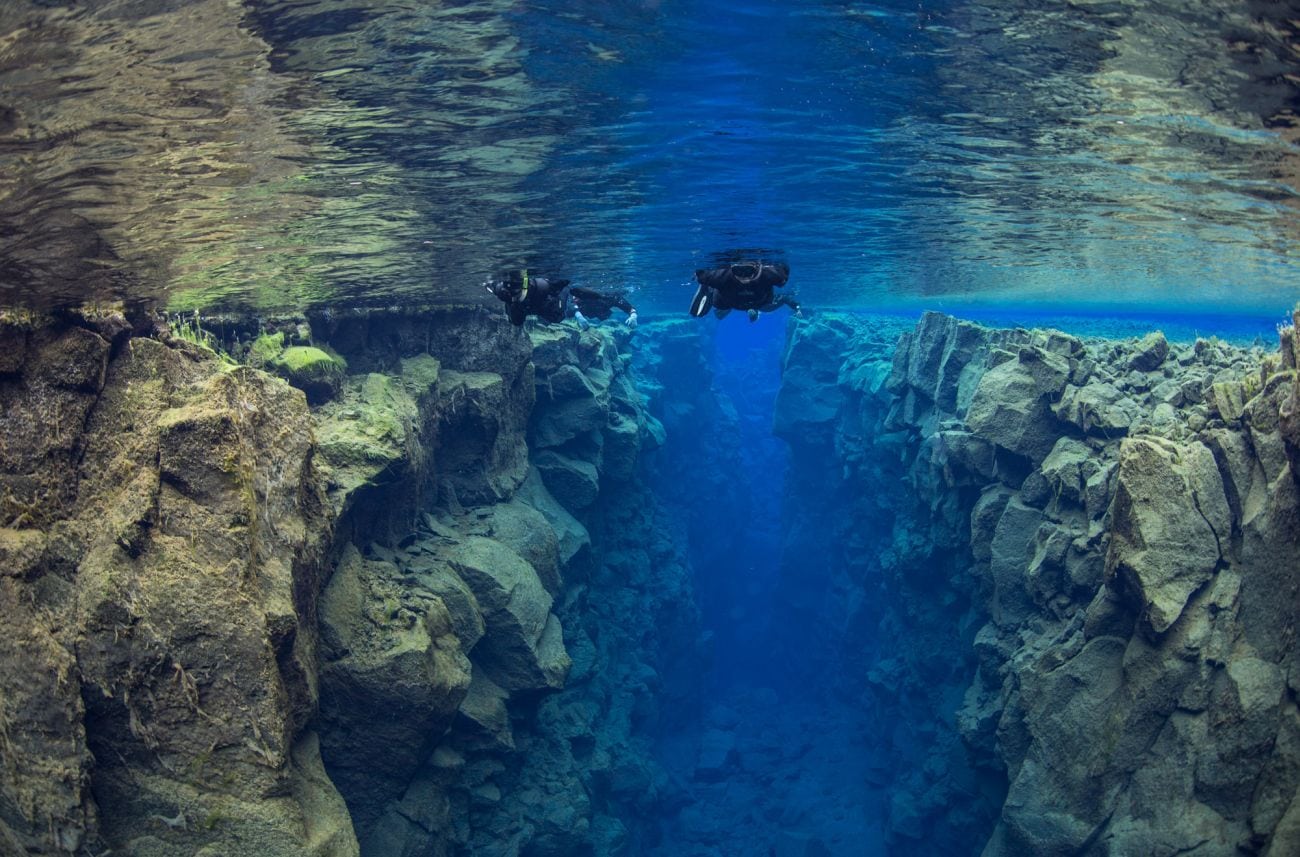
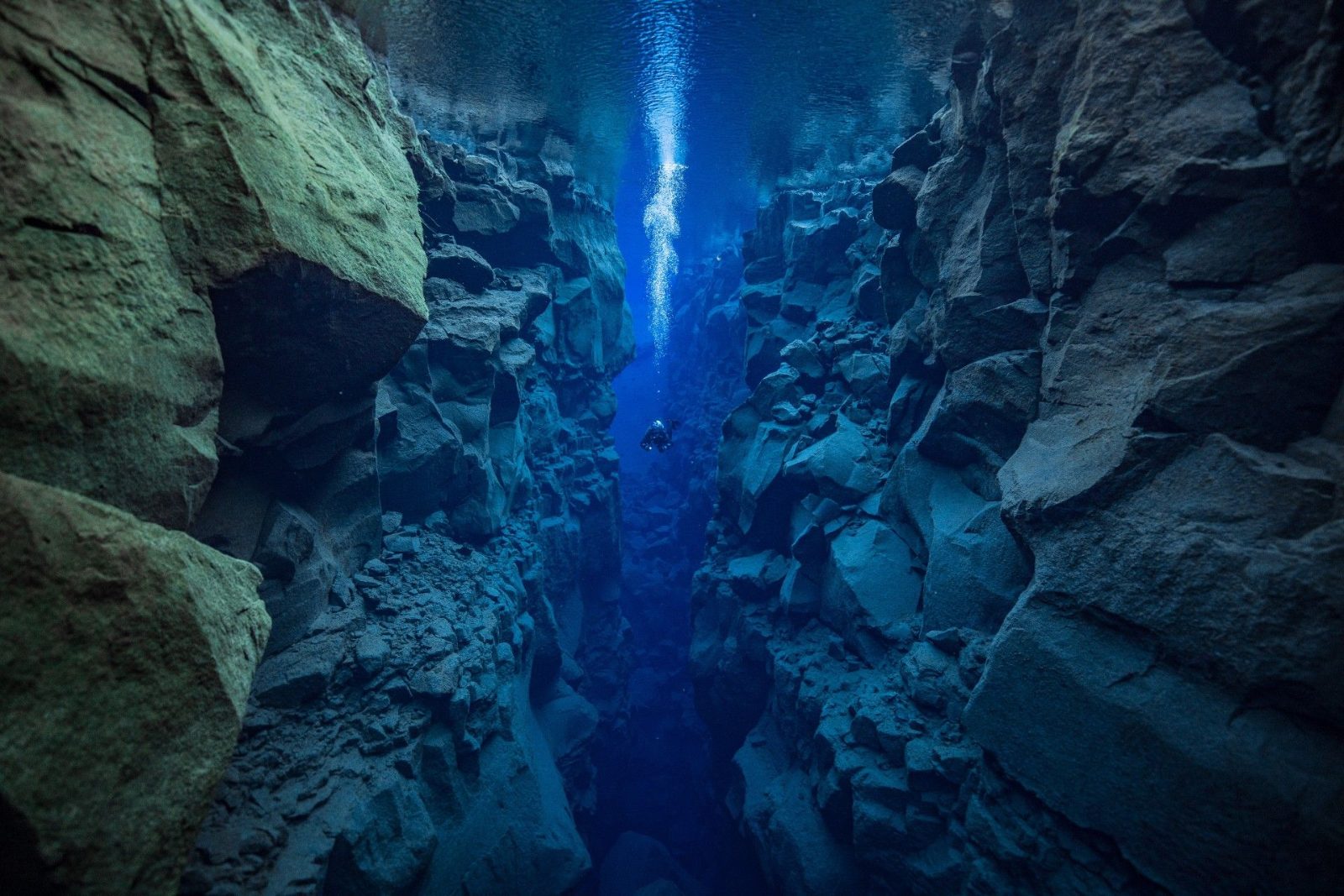
The Cathedral is a long, narrow section of Silfra often described as a dramatic swim-through between rock walls. At about 100 meters in length, it gives the strongest sense of scale inside the fissure without requiring deep technical diving.
This calmer section acts as a transition zone where the water opens up and visibility remains exceptionally high. It is a useful contrast to the tighter passageways because it shows how the rift changes from narrow slot to open basin.
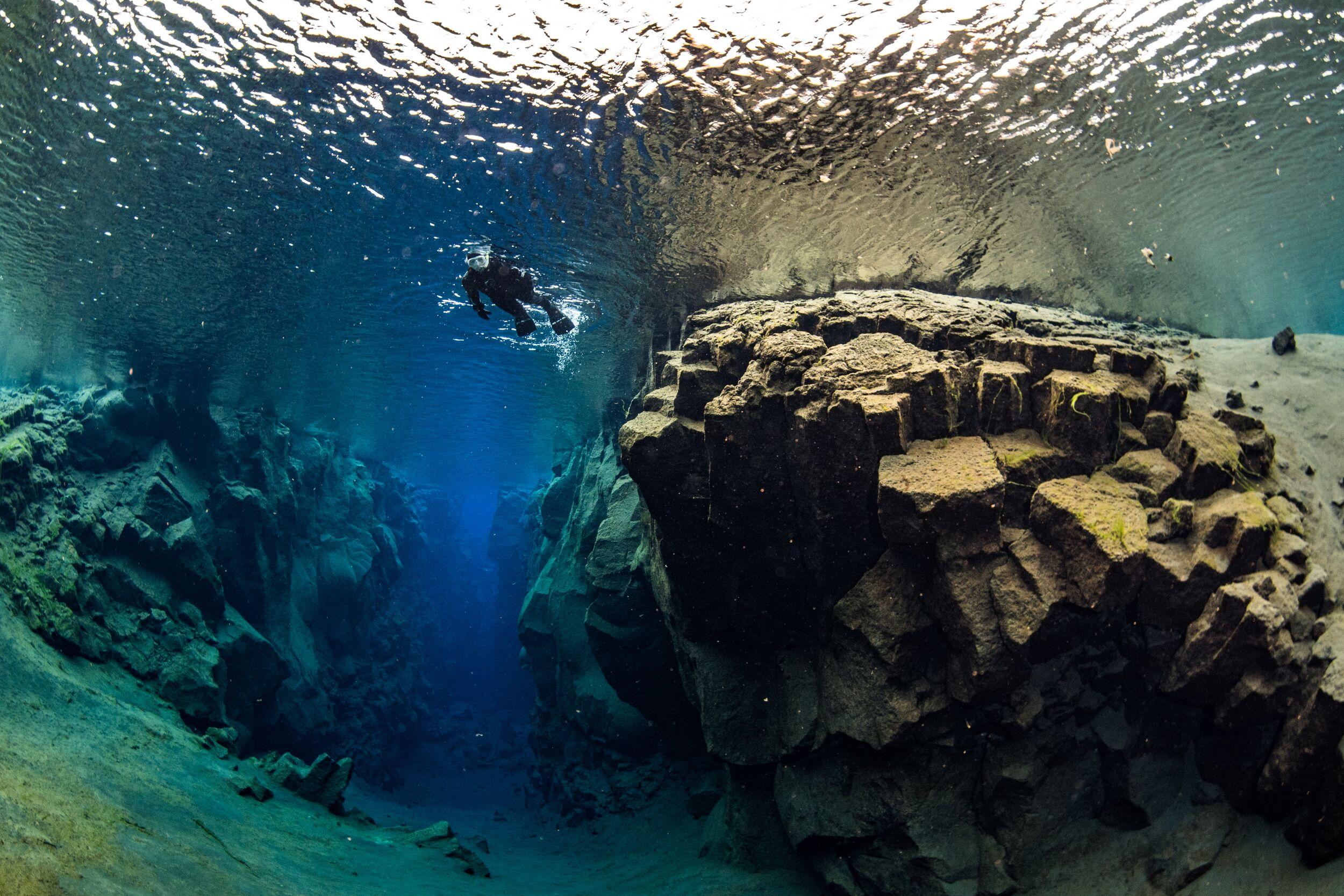
Big Crack is one of the named passages around Silfra and is part of the route that shows the fissure’s volcanic walls at close range. The rift’s sides are made from layered lava flows, a reminder that the attraction is a plate-boundary feature as much as a snorkeling site.
This named area is closely associated with the route through the fissure and its iconic water clarity. It is one of the spots where the idea of snorkeling between two tectonic plates feels most tangible because the walls and waterline are so sharply defined.
The exit area is where the route opens out and visitors finish the in-water portion before moving back toward the trail and parking. Its importance is practical rather than dramatic: this is where the tour rhythm shifts from floating silently to rewarming and regrouping.
All the details about your upcoming adventure in one place
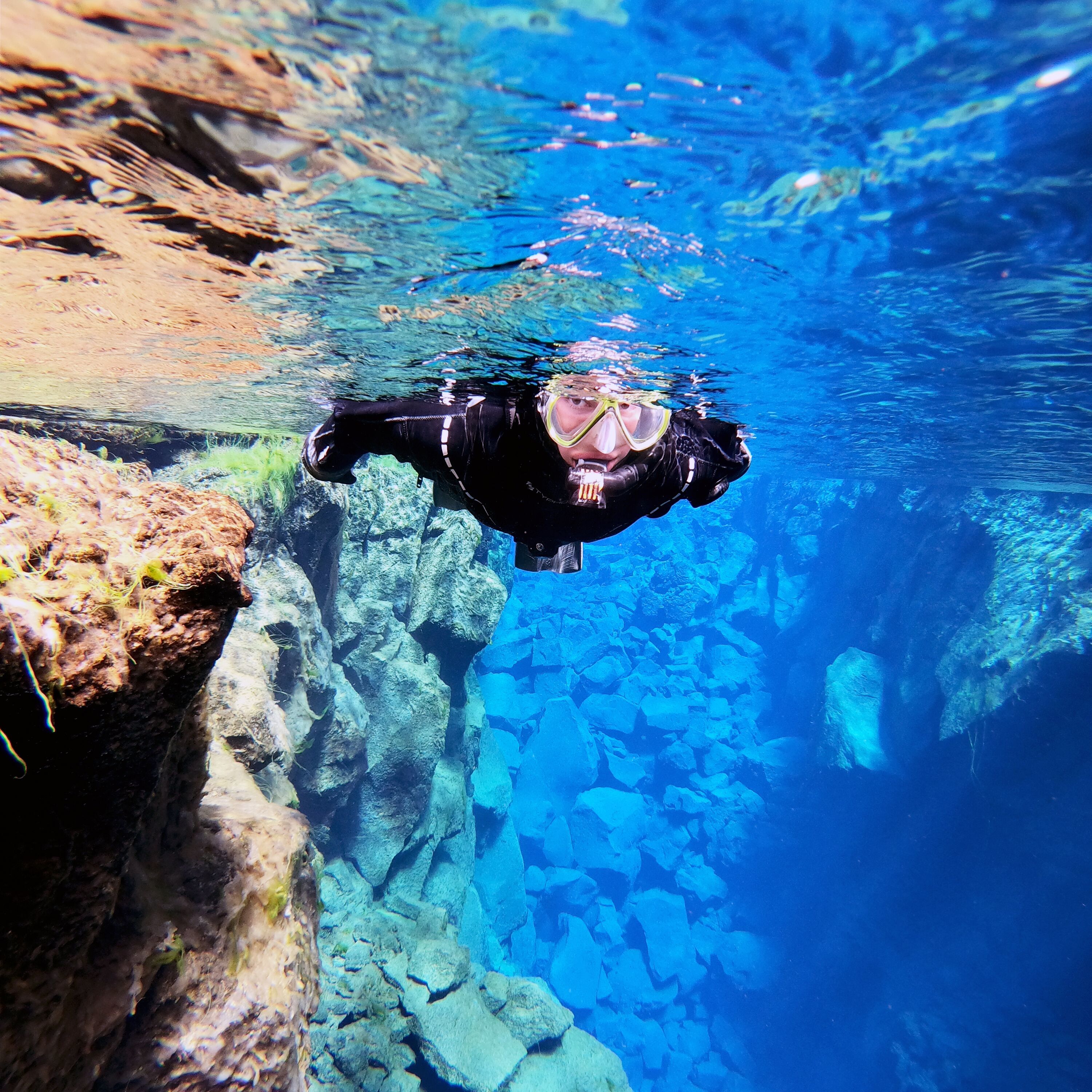
The water at Silfra fell as snow on the Langjökull glacier decades before any snorkeler floats in it. It travels roughly fifty kilometres underground, filtered through porous basalt until almost nothing is left in suspension, and surfaces at a constant two to four degrees Celsius.
Visibility there regularly exceeds one hundred metres. That single measurement explains the appeal of a silfra fissure snorkeling from reykjavik tour better than any photograph.
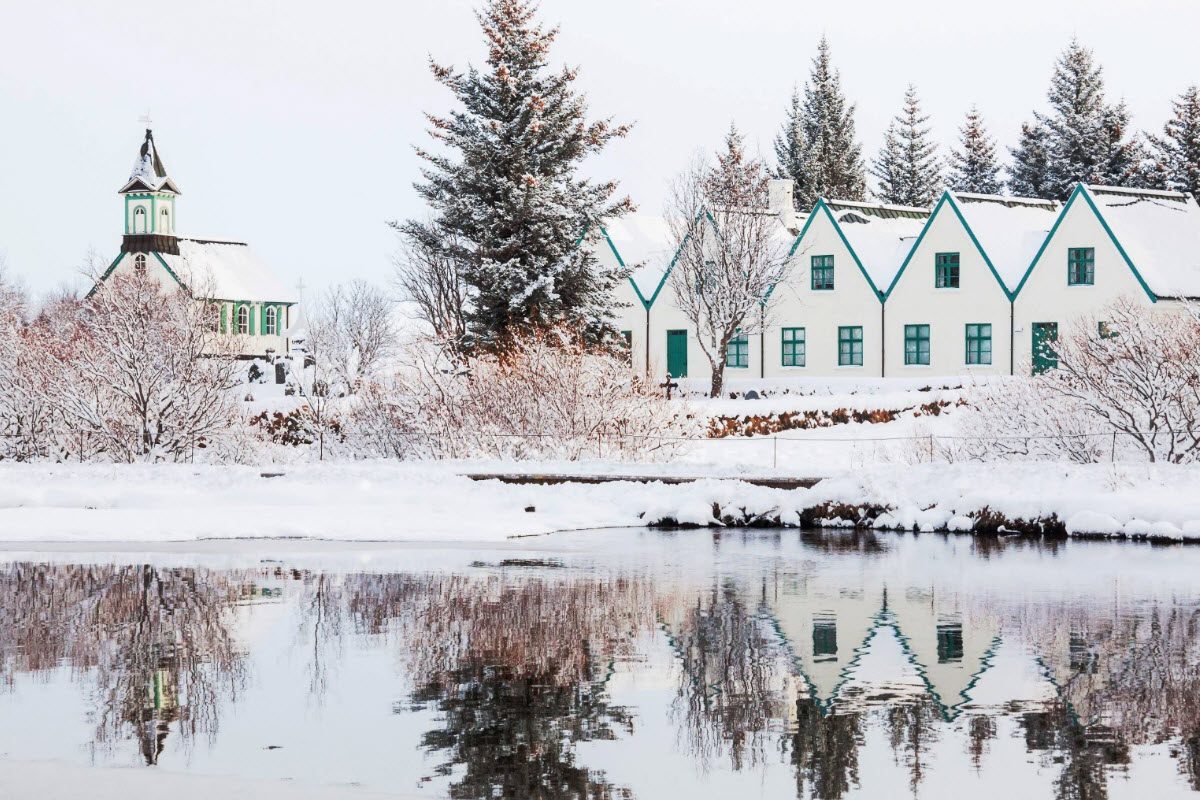
The fissure lies inside Þingvellir National Park, on the plain where Icelanders convened the Alþingi in 930 AD and where the country later declared its republic in 1944. UNESCO inscribed the park in 2004 for that assembly rather than for its geology. Silfra itself — Silfra gjá in Icelandic — is a crack in the Mid-Atlantic Ridge, the seam where the North American and Eurasian plates draw apart, and it is one of the few places on earth where that boundary can be entered rather than merely viewed.
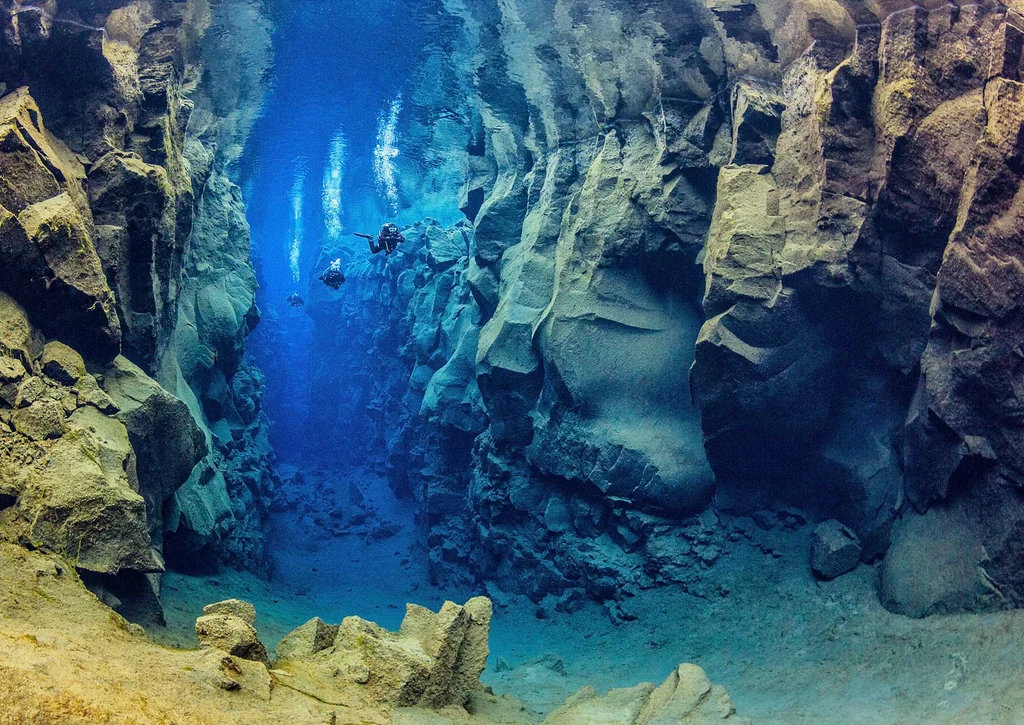
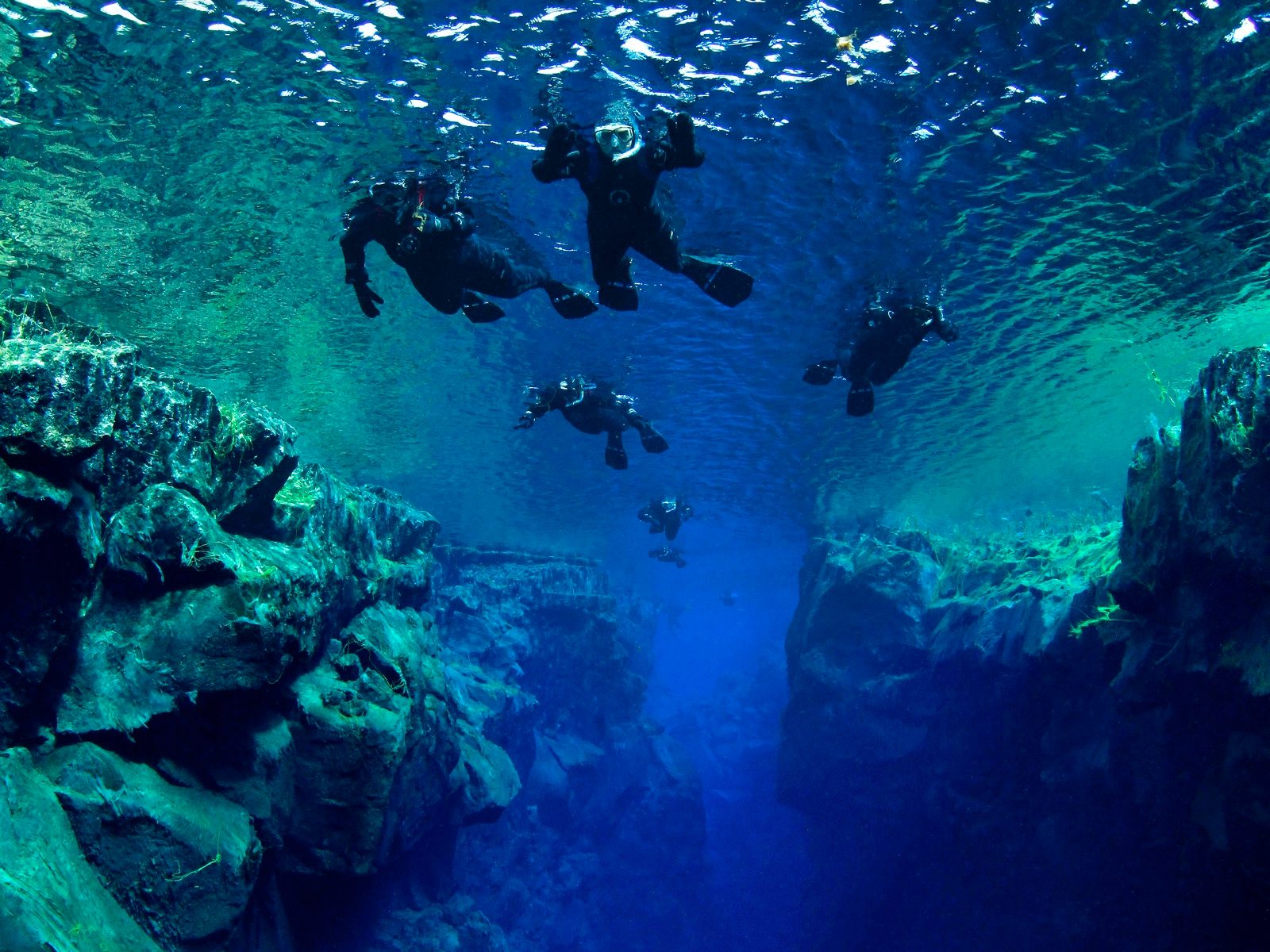
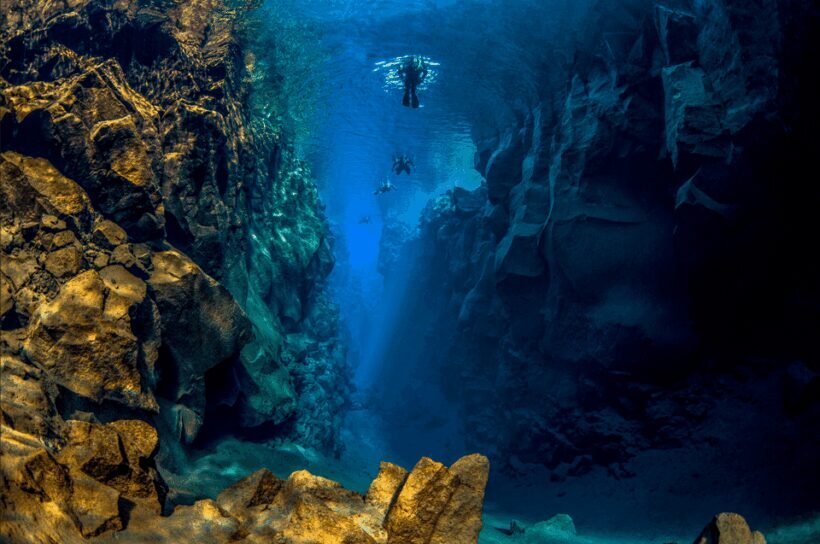
Underwater, the fissure resolves into four named passages. The Big Crack narrows to roughly a metre at its tightest point. Silfra Hall opens behind it, then the Cathedral — a corridor about one hundred metres long, walled in ribbed basalt that falls away into blue dark. Nothing grows on those walls except a pale filamentous algae Icelanders call troll hair, which coats the ledges through the summer months. The Silfra Lagoon closes the route: bright, floored with pale gravel, shallow enough to stand in.
Access is tightly regulated. Þingvellir permits only licensed operators to run the site, drysuit certification or guided drysuit supervision is mandatory, and group sizes are capped by park rules. The practical consequence is that almost nobody swims Silfra independently; the fissure is reached through an organised Þingvellir snorkeling day trip, with round-trip transfers from the capital built into the arrangement. Several silfra fissure snorkeling from reykjavik tours extend the drive into the wider Golden Circle circuit, adding Kerid crater on the return leg. That pairing has shaped how the rift valley and its neighbouring Iceland landmarks have been visited for the better part of two decades, and it is why the Silfra car park fills with minibuses rather than private cars.

The water at Silfra fell as snow on the Langjökull glacier decades before any snorkeler floats in it.
Most operators offer a full refund if you cancel at least 24 hours before the scheduled start time in Icelandic local time. Cancellations within 24 hours are generally non-refundable, and the 1,000 ISK parking service fee is separate from tour refunds.
Silfra is a crack in the Mid-Atlantic Ridge, the seam where the North American and Eurasian plates pull apart across Þingvellir. The rift valley itself began subsiding roughly 9,000 years ago, after the Þingvallahraun lava field erupted from the Skjaldbreiður shield volcano. Earthquakes did the rest. The fissure that visitors now enter is generally dated to a large quake around 1789, which dropped the valley floor and opened fresh fractures along the Almannagjá and Silfra lines. Ground subsidence continued through the following decades, measured by Icelandic surveyors from the nineteenth century onward. The water explains the fame. Meltwater from Langjökull, some 50 kilometres north, travels underground through porous basalt for an estimated 30 to 100 years before surfacing at Silfra. The lava filters it. Visibility regularly exceeds 100 metres, and the temperature holds near 2–4°C year round. Those figures are why silfra fissure snorkeling from reykjavik became a fixture of Icelandic tourism rather than a local curiosity. Þingvellir was already sacred ground: the Alþingi assembly convened here from 930 AD, and UNESCO inscribed the park as a World Heritage Site in 2004. Organised diving arrived slowly. Icelandic divers explored the fissure through the 1970s and 1980s, mapping Silfra Hall, the Cathedral and the shallow Blue Lagoon section. Commercial permits followed, and by the mid-2000s Þingvellir National Park had begun regulating operators, entry platforms and dive counts. A metal staircase and exit platform were installed to stop bank erosion. Fatal incidents in the 2010s prompted stricter guide ratios and certification checks. Today a park parking fee of 1,000 ISK (parking service fee per car) applies, and the site is open 09:00–18:00 daily. What survives is a rift still widening by about two centimetres a year. Guided snorkeling tours from Reykjavik now bring thousands each summer to a fault line that predates the country's parliament. Booking silfra fissure snorkeling from reykjavik tickets means, in effect, entering the boundary between two continents.
Eruptions from the Skjaldbreiður shield volcano laid down the Þingvallahraun lava field that Silfra now cuts through.
The Alþingi assembly first convened at Þingvellir, on the rift plain directly above the fissure.
A major earthquake dropped the valley floor and opened the fracture system that forms today's Silfra.
Þingvellir was designated Iceland's first national park, protecting the rift landscape around the fissure.
Icelandic divers mapped the underwater chambers later named Silfra Hall, the Cathedral and the Blue Lagoon.
UNESCO inscribed Þingvellir National Park as a World Heritage Site.
The park introduced operator permits, fixed entry stairs and an exit platform to control access and bank erosion.
Silfra remains open daily 09:00–18:00, with guided snorkeling run under park-regulated guide ratios.
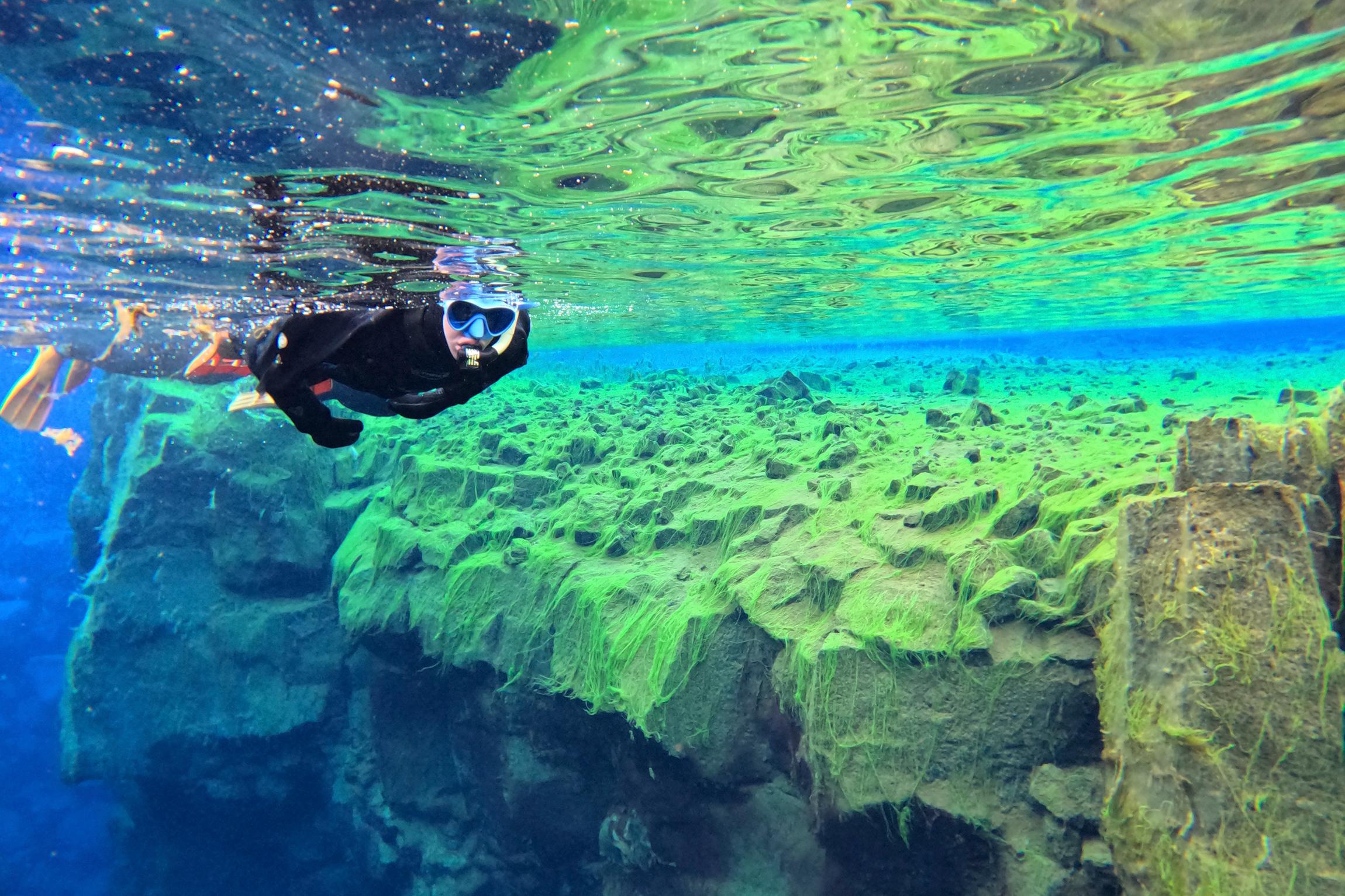
A long, corridor-like section with steep lava walls and a strong sense of depth. Stand centered in the fissure to frame the rock walls rising on both sides and the clear water column ahead; this is part of the silfra fissure snorkeling from reykjavik route, so you only reach it on the guided in-water section. Best from the first stretch after entry, before other snorkelers drift into frame.
The widest open-water section, where the gap opens and the walls drop almost straight down. Position yourself low in the water facing the full span of the fissure for a clean end-to-end shot, especially when the light is strongest overhead. This is the classic “clear water and open chasm” view on silfra fissure snorkeling from reykjavik tours.
A broader, calmer finish with a long view across the water and the feeling of entering a lake-like basin. Shoot toward the open expanse to capture the last panoramic stretch before the current carries you onward; good for a wider composition after the tighter hall and cathedral sections. The lake-edge framing works well for silfra fissure snorkeling from reykjavik tour photos.
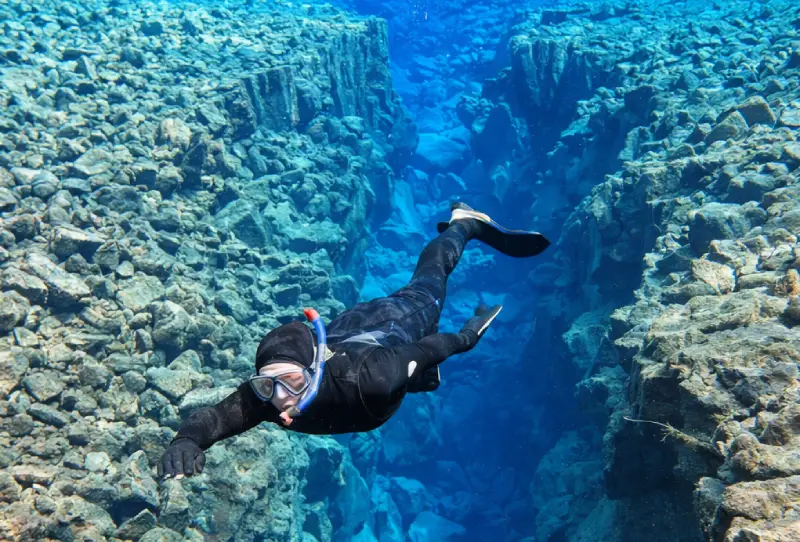
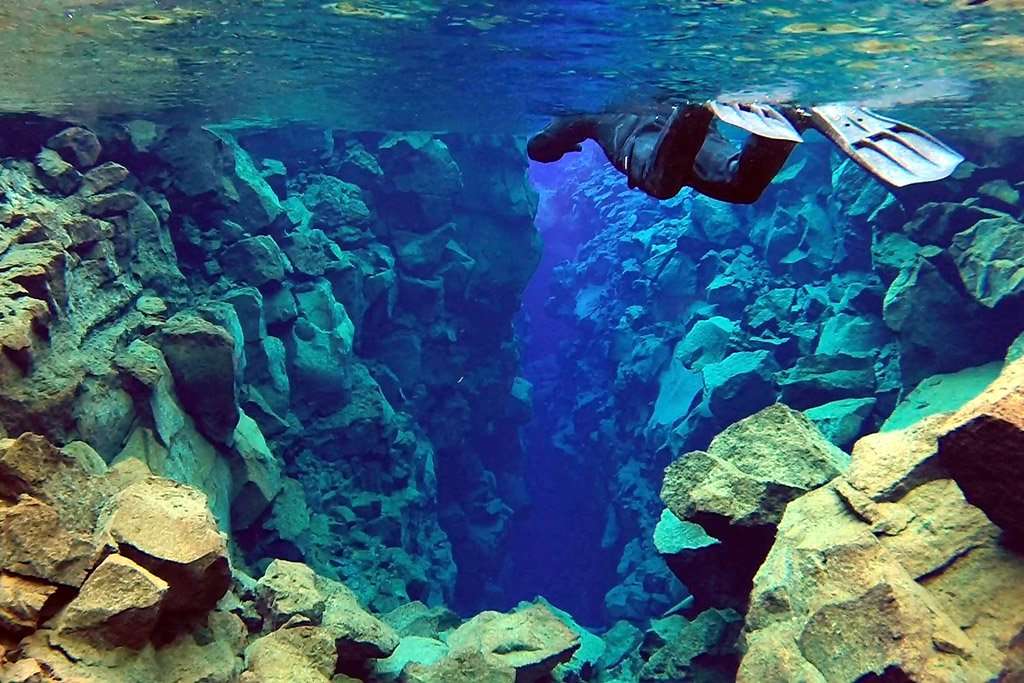
A narrower crack with a more enclosed, canyon-like look and sharply defined rock edges. Stay close to the wall side for a dramatic vertical frame that emphasizes the fissure walls and water clarity; the tighter geometry is best when your group spacing is controlled. Use this as an abstract detail shot for silfra fissure snorkeling from reykjavik tickets imagery.
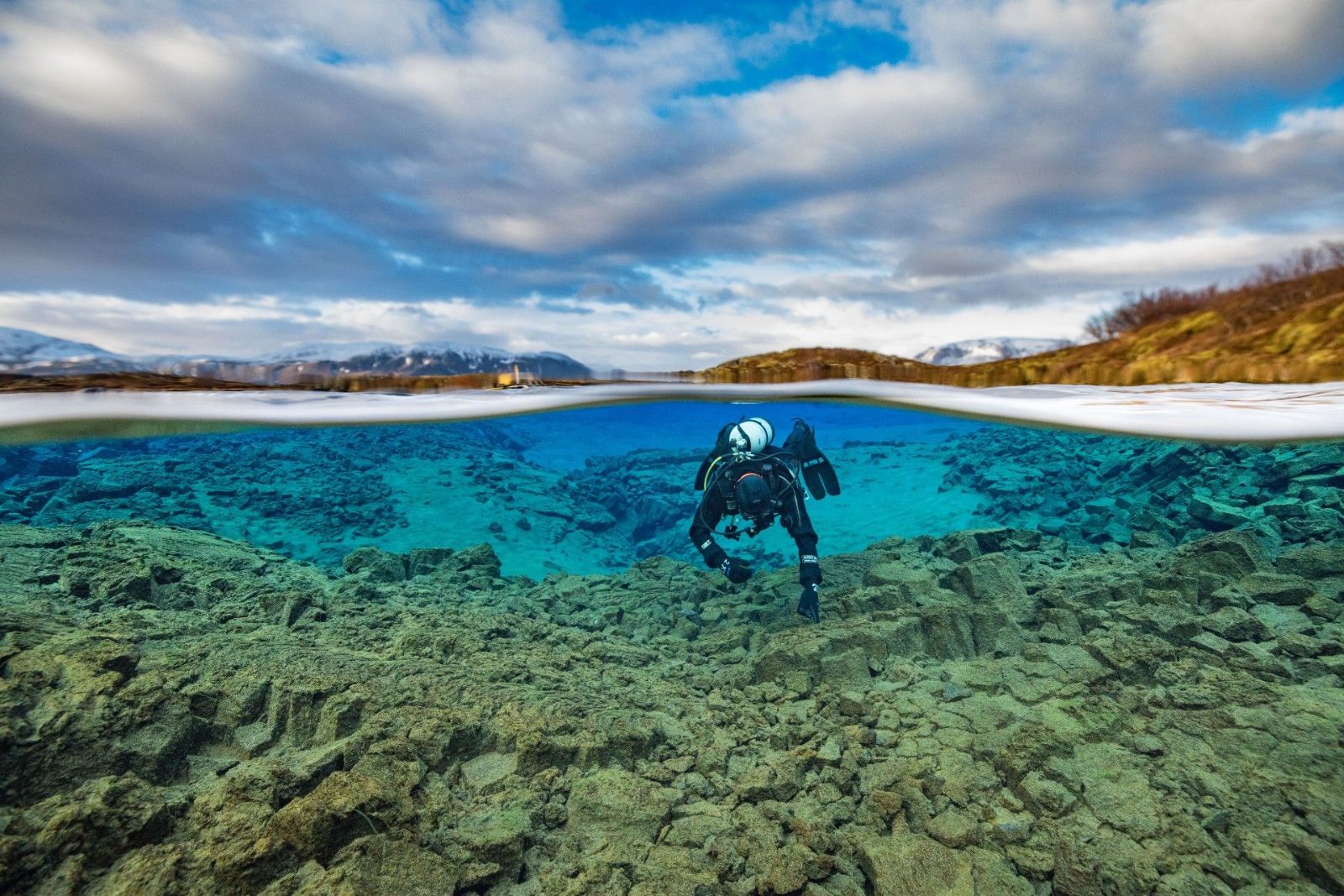
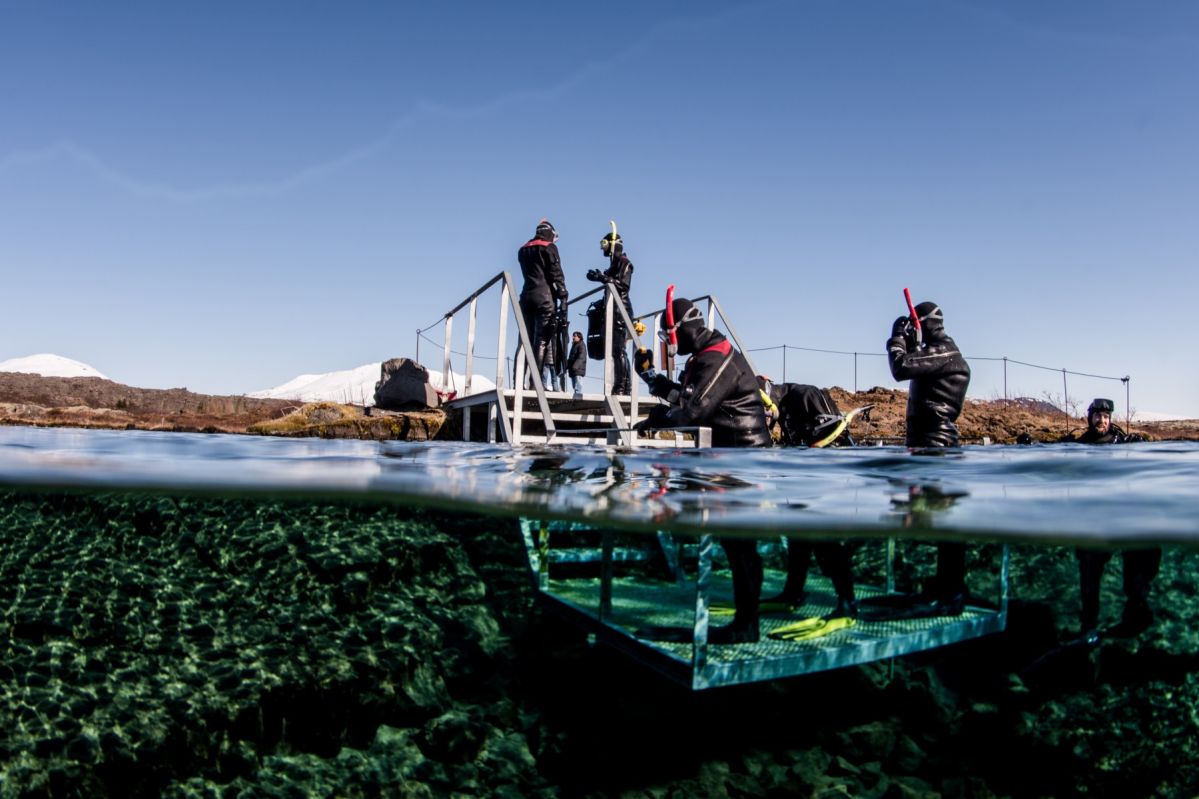
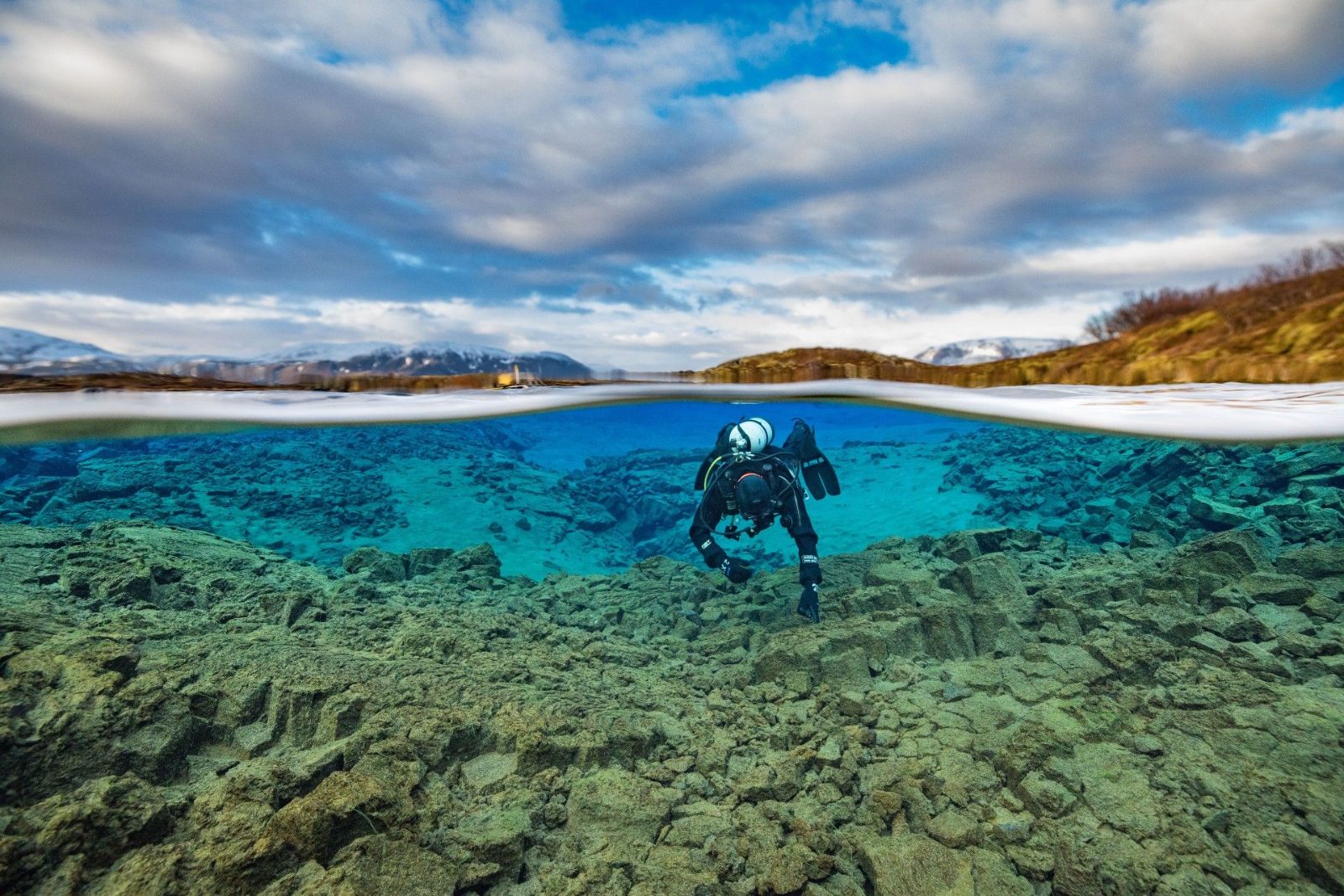
From the shore-side exit area, you get the best surface-level overview of the fissure and the route you just swam. Step back enough to include the waterline and surrounding lava field for a context shot that reads well as an arrival or finish image. This is the easiest non-underwater angle on the Silfra Fissure site.
Families usually treat silfra fissure snorkeling from reykjavik as a booked-transfer day trip rather than a casual stop, so it works best with older kids who are comfortable in cold-water gear and a structured check-in. The park has parking and a service desk nearby, but the experience itself is not stroller-friendly, so plan for a carry solution and a patient pace.
Not practical on the Silfra approach or entry path, so bring a baby carrier if you are traveling with a child who cannot walk the route. The nearest parking for Silfra is P5 Valhöll, and Þingvellir charges a 1,000 ISK parking service fee per passenger car.
There is no family ticket or child-specific age rule stated on the official Þingvellir pages I checked, so the safe choice is to book only for children who can follow a guide, stay with a buddy, and handle cold-water snorkeling. For younger kids, the better plan is to visit Þingvellir as a landmark stop instead of joining the water activity.
The Visitor Centre area has toilets, and the service centre at Leirar includes a café and a shop, so you can manage basics before or after the tour. The official site also notes that diving and snorkeling permits are handled on site, which is useful if you are coordinating a family tour day.
Build in extra time around the check-in because silfra fissure snorkeling from reykjavik tours are run on a fixed schedule and the park can be busy near the popular parking areas. If one child is unsure about the cold, keep the visit short and treat the water portion as the only hard commitment.
The Leirar service centre café is the easiest family fallback for a warm drink or snack after the snorkel, rather than planning a long sit-down meal inside the park. Pack water and simple snacks for the transfer because the activity itself is focused on the water and gear routine.
Weather is not the main limiter here; the bigger issue is comfort in the cold, so have dry layers ready for after the snorkel. If the forecast makes the day feel too difficult for a child, use the transfer as a Reykjavik land trip and save the swim for another day, even on silfra fissure snorkeling from reykjavik tour bookings.
For silfra fissure snorkeling from reykjavik, the easiest food plan is simple: eat before you leave the city or save a proper meal for after you return. Þingvellir has a café at the service centre, but choices are limited, so most visitors still plan around Reykjavík for lunch or dinner after the tour. If you want to keep the day flexible, book a table in town rather than relying on a long stop on-site.
The on-site café at Þingvellir National Park is the most convenient stop if you want something quick before or after the snorkel. It suits a short break more than a full meal, so expect a compact menu and a steady flow of tour visitors.
A reliable Reykjavik pick for breakfast, brunch, or an easy post-tour lunch back in town. Order burgers, salads, or pancakes if you want something filling without a long wait.
Good for coffee, pastries, and a lighter meal near the city center before an early departure or after you return. It works well if you want a quick stop rather than a slow dinner.
Best for an after-tour drink and a relaxed late bite once you are back in Reykjavík. The daytime café feel keeps it flexible, while the surrounding streets give you plenty of dinner options nearby.
Everything you need to know for your journey
Please contact us for more information.
Join thousands of happy travelers who have discovered this incredible experience
Book Your Experience Now