Quick answer
Wear warm, non-cotton base layers — thermal leggings, a wool or fleece top and thick socks — under the drysuit and thermal undersuit the operator supplies. Hood, gloves, mask, snorkel and fins come with the rental. Bring a hat and windproof jacket for the walk back, and arrive between 09:00 and 11:00, when the site is quieter.
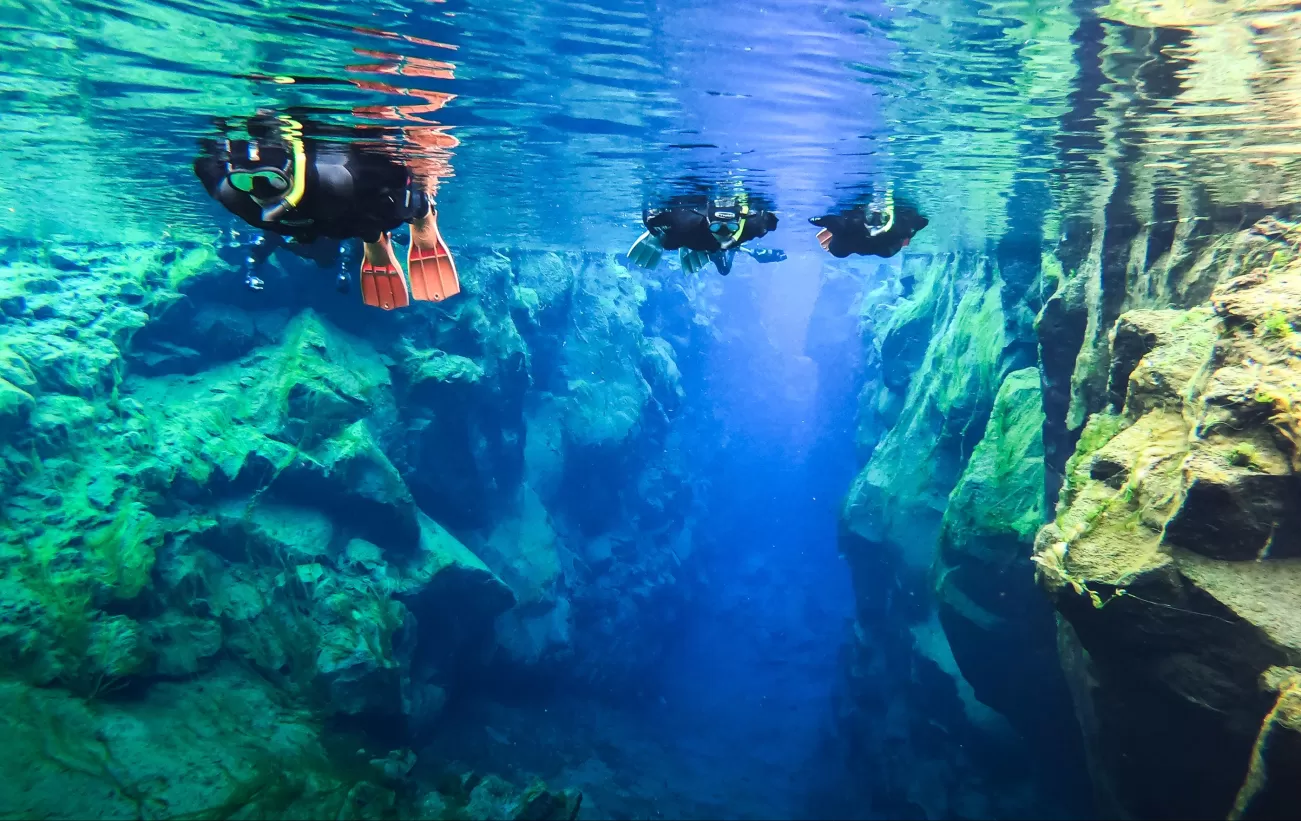
The water in Silfra never sees daylight on its way to the fissure. It leaves the Langjökull glacier, filters through porous lava for decades, and surfaces clear enough to drink, which is why visibility down the rift is measured in tens of metres rather than metres. It also surfaces cold, and stays that way in August as reliably as in January. Anyone researching silfra fissure snorkeling what to wear is asking a heat-retention question rather than a wardrobe one. Gear for a Silfra drysuit snorkelling tour arrives in three parts. The outer shell is the drysuit itself, sealed at the neck and wrists, issued by the operator along with hood, gloves, mask, snorkel and fins. Under that goes a thermal undersuit, also supplied. The only layer a visitor chooses is the one against the skin, and it decides whether the drift from Silfra Hall through the Cathedral to the Lagoon feels steady or short. Wool and synthetic fleece keep their warmth when damp; cotton loses it. Detailed garment lists, sizing notes and month-by-month temperature ranges belong to the dedicated sections below. Context explains the rest. Þingvellir National Park straddles the rift between the North American and Eurasian plates, and the entry platform at Silfra gjá sits open to the wind coming off Þingvallavatn. Snorkellers spend longer standing in their kit than floating in it: the briefing, kitting up, the walk down the boardwalk, then the climb out and the return along the path. Wind, not water, is what most first-timers misjudge. A windproof shell and a warm hat carried for those transitions do more work than any extra layer worn underneath. Kit lists differ between dive centres, so guidance on silfra fissure snorkeling what to wear should be read alongside whatever the chosen operator sends in its confirmation. The park's official diving pages at thingvellir.is cover access and permits for Þingvellir snorkelling gear and guides, and the booking pages elsewhere on this site set out which operators include which equipment.
“Wind, not water, is what most first-timers misjudge.”
Silfra Fissure Snorkeling What to Wear: Clothing Rules and Gear Requirements
Silfra runs at roughly 2°C year-round, so what you wear under and over the drysuit is a safety requirement rather than a style choice. Operators can turn away snorkelers who arrive in unsuitable base layers or without the mandatory exposure gear.
Do
- Wear thin thermal base layers under the supplied undersuit
- Choose wool or synthetic fleece for warmth when damp
- Bring dry socks long enough to reach mid-calf
- Wear the neoprene hood and gloves issued with your drysuit
- Tie back long hair before the neck seal is fitted
- Change into clean, dry clothes immediately after surfacing
Don't
- Do not wear cotton layers, jeans, or hoodies under the drysuit
- Do not skip the hood or gloves in open water
- Do not wear bulky jumpers that block a proper seal
- Do not apply lotions or oils that degrade latex seals
- Do not wear jewellery, watches, or belts that snag the seals
- Do not enter without full cold-water exposure protection fitted
Silfra Fissure Snorkeling What to Wear: Water Temperature and Best Time of Day
The best time to visit Silfra for a snorkel is early in the day, especially on a weekday morning in April, May, September, or October. The water stays cold year-round at about 2–4°C, so the calmer morning window helps comfort and makes layering feel more manageable.
Spring shoulder season
lighter crowds, more space2–4°C water, cool air
April and May usually give a good balance of lighter visitor flow and workable surface conditions. If you want a quieter start, aim for the first morning slot so you are not layering up against a rush.
Autumn shoulder season
moderate crowds, steady pace2–4°C water, cool air
September and October often pair smaller crowds with crisp weather. That makes them a strong choice if you want a calmer visit without changing the cold-water reality.
Weekday mornings
quietest arrival window—
Arriving between 09:00 and 11:00 is the calmest part of the day. It is the easiest window for moving at a relaxed pace before the site gets busier.
Midday weekends
busiest period—
Late morning into early afternoon is typically the busiest stretch, especially on Saturdays and Sundays. If you can avoid that window, the whole visit feels less compressed.
Verdict: Best slot: Tuesday to Thursday, arriving at opening in April or October.
Silfra Fissure Snorkeling What to Wear: Pre-Visit Clothing Checklist
Work through this list in the weeks before your Silfra snorkel so nothing is missing when you reach the changing area at Þingvellir National Park.
-
Book your snorkel tour in advance — Silfra dive and snorkel access runs through licensed operators, not walk-ins.
-
Confirm passport or photo ID details — Operators verify age and identity against the booking before kitting you out.
-
Declare medical conditions when booking — Drysuit snorkelling has health and fitness conditions your operator must check early.
-
Pack thin thermal base layers — You wear your own layers under the supplied undersuit, so bring wool or synthetic, never cotton.
-
Bring a dry change of clothes — Hair and hands get wet, and the walk back to the car park is exposed.
-
Add a warm hat and gloves for after — Fingers stay cold once the drysuit comes off, especially in wind.
-
Carry 1,000 ISK for parking — That is the parking fee near Silfra, payable on the day.
-
Aim to arrive between 09:00 and 11:00 — It is quieter early, leaving time to sign paperwork and change unhurried.
Check availability
Frequently asked questions about Silfra wear
Everything you need to know about silfra fissure snorkeling what to wear